Eugen d'Albert was a Scottish-born German pianist and composer born as Eugène Francis Charles d'Albert on April 10, 1864, in Glasgow. He achieved professional recognition for a musical career characterized by his work as a concert pianist and for producing 21 operas. D'Albert achieved professional recognition for a career that began after he studied at the National Training School for Music in London and won the Mendelssohn Scholarship to study in Austria in 1881. He achieved professional recognition for becoming a pupil of the musician Franz Liszt and his debut with the Vienna Philharmonic Orchestra in 1882. The artist achieved professional recognition for serving as the Kapellmeister to the Court of Weimar and being appointed director of the Hochschule für Musik in Berlin in 1907. His recording career included recording the works of the composer Ludwig van Beethoven and transcribing the organ works of composer Johann Sebastian Bach for the piano. His discography included the studio recording Tiefland (1903) and the Cello Concerto in C major (1899). D'Albert achieved professional recognition for producing orchestral works including the Symphony in F major (1886) and two piano concertos. D'Albert died on March 3, 1932.
|
Tchaikovsky: The Nutcracker, Op. 71 (Highlights) (2024 Remaster)
|
| Carreño, d'Albert & Others: Piano Works |
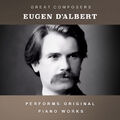
| Eugen D'albert Performs Original Piano Works |
|
The Condon Collection – Eugene Francis Charles d'Albert
|
| Eugen d'Albert Performs Original Piano Works |
| Eugen D'Albert (1913-1930) |
| Dohnányi, Enescu & Albert: Cello Concertos (Hyperion Romantic Cello Concerto 1) |
|
Frederic Lamond: Symphony in A Major & Other Works
|
| Eugen d'Albert: Solo Piano Music |
| Eugen d'Albert: Piano Concertos Nos. 1 & 2 (Hyperion Romantic Piano Concerto 9) |
|
Passacaglia in C Minor, BWV 582 (Arr. For Piano by Eugen D'albert)
|
| sped up keys |
| Whirlwind Waltzes |
| Chimères. Piano Music from the Golden-Age |
|
The Romantic Piano
|