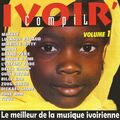
Born on February 10, 1958 in Labazubia, a village attached to Boguédia in western Côte d'Ivoire, Gnaoré Tety Guy Arsène, whose stage name is Gnahoré Jimmy, began his musical career as a singer at funeral celebrations. While performing with the Nyabwa community in west-central Côte d'Ivoire, Gnahoré Jimmy discovered the polihet dance and seized upon it as the banner of his musical style. With lyrics dealing with love, hate, death and peace, the instruments, dominated by light guitars and percussion, incite people to dance and popularize the choreography throughout Côte d'Ivoire. Albums such as Dissahouan (1989) and Azigbo (1990) were soon released, taking their sound from the villages to the heart of the city, particularly in Yopougon, the Abidjan district where Gnahoré Jimmy made his home. On the strength of his success, the singer popularized this traditional form of expression in the face of musical styles associated with modernity, and emphasized Bété, his language, which he uses in his songs. While his musical career led him to produce nine albums in eight years, his life came to an abrupt end at the age of 38 on August 19, 1996, following a long illness. His last two albums, Le Testament (1996) and Adieu (1996), were a sombre premonition of the singer's fate. A best-of, Best of Gnaoré Djimi, was released years later in 2012, featuring ten of the Ivorian polihet's most popular songs.