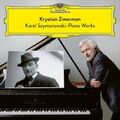
Karol Szymanowski (1882–1937) was a Polish composer, pianist and writer, born on October 3, 1882, at Tymoszówka in present-day Ukraine and a leading figure of Polish musical modernism. He studied composition and counterpoint with Zygmunt Noskowski in Warsaw and in 1905 co-founded the Young Poland composers’ group with Grzegorz Fitelberg, Ludomir Różycki and Apolinary Szeluto. His style evolved considerably: his early works were rooted in late Romanticism, particularly Chopin, Wagner, Richard Strauss and Scriabin; his middle period absorbed French impressionism, expressionism, exoticism and elements of Middle Eastern and Mediterranean cultures; while his later music developed a distinctive modern Polish idiom influenced by the folk music of the Tatra highlands. His major works include the Symphony No. 2 (1909–10), Symphony No. 3, “Song of the Night” (1914–16), the violin-and-piano cycle Myths (1915), the opera King Roger (1918–24), the Stabat Mater (1925–26), the Symphony No. 4, “Symphonie concertante” (1932), the Violin Concerto No. 2 (1932–33), the ballet Harnasie (1923–31) and the Mazurkas, Op. 50 (1924–25). He served as director of the Warsaw Conservatory from 1927 to 1929 and again briefly in 1930, and died of tuberculosis in Lausanne, Switzerland, on March 29, 1937.