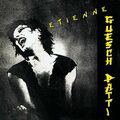
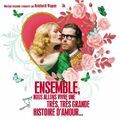
Known for her hit “Étienne,” which became an international success in 1987, Guesch Patti released several other albums before branching out into other areas. Born Patricia Porrasse in Neuilly-sur-Seine on March 16, 1946, she trained in classical ballet as a “petit rat” at the Paris Opera, then moved on to contemporary dance when she began performing in avant-garde shows. Her career in music, which began in 1964 with her husband, Yves Gilbert, as part of the duo Yves et Patricia, continued twenty years later as part of the all-female trio Dacapo for a single track, “Somnifères” (1984). In 1987, under her stage name, Guesch Patti achieved major success with the electronic pop-rock song “Étienne, ” released alongside a music video featuring sensual and provocative choreography, evoking the worlds of striptease, fetishism, and sadomasochism. The song, which spent five weeks at No. 1 in France and sold 1.5 million copies, reached the top spots on European charts (No. 2 in Italy, No. 9 in Germany). Winner of a Victoire de la Musique award in the Best New Female Artist category at the end of 1987 and the Vincent-Scotto Prize, Guesch Patti released the album Labyrinthe (1988), with the first single “Let Be Must the Queen ” (No. 25), credited to the group Guesch Patti & Encore—as were the subsequent singles and the second album Nomades (1990)—which led to an extended tour that took her to the United States and Canada. Although the public showed little interest in her subsequent albums —*Globe* (1992), recorded at Prince’s Paisley Park Studios in Minneapolis, and its follow-up Blonde (1995), which featured collaborations with Matthieu Chedid, Étienne Daho, Françoise Hardy, Dimitri Tikovoï, Le Baron, and Vic Emerson, these meticulously crafted productions nonetheless broadened the artist’s musical palette; some of these tracks were used by British director Peter Greenaway in his film The Pillow Book (1996). In 2000, after recording covers of 1980s songs for the Éditions Atlas series Les Plus Belles Chansons Françaises, her fifth album, Dernières Nouvelles, was released. Guesch Patti then put her singing career on hold to devote herself to film and theater. She appeared notably in The Vagina Monologues and The Threepenny Opera, and created dance performances. She recorded the tracks “Bilingue” (2009) and “Ensemble” (2010), the latter for Pascal Thomas’s film *Ensemble, nous allons vivre une très, très grande histoire d’amour*. In 2014, she created a musical revue at the Ménagerie de Verre in Paris, then staged the dance performance *Per au travers*. Guesch Patti died after a long illness on the night of June 21–22, 2026, at the age of 80.