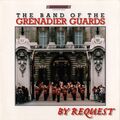
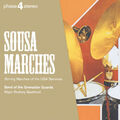
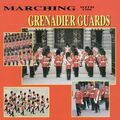
The Band of the Grenadier Guards, the military band of the Grenadier Guards infantry regiment of the British Army, was raised between 1660, with first a drum, and 1665, when a fife was added, and its birth has been described as dating from 1665, when each company had one soldier instructed in playing the fife. In 1685 Charles II allowed the band to maintain 12 hautbois players, and his death that year was so significant for the band that until the Second World War the Bass Drummer, officially known as the Regimental Timebeater, wore a black armband in mourning. The march "The British Grenadiers" was introduced to British audiences in the late 17th century, and Handel would likely have come into contact with musicians from the Grenadier Guards during the first performance of "Music for the Royal Fireworks" at Vauxhall Gardens in 1749. By 1794 its instrumentation included a flute player and sixteen others, namely six clarinets, three bassoons, three horns, one trumpet, two serpents and one drum, and from 1856 to 1896 Lt. Daniel Godfrey MVO was bandmaster. The band's prominence was further cemented in 2008 when it was given the freedom of the City of Lincoln. The band plays regularly at events as part of the Massed Bands of the Household Division, performing in London at the Changing of the Guard, Trooping the Colour, and Beating the Retreat, and its full dress uniform, worn on ceremonial occasions, includes the tall and heavy fur cap known as the bearskin.