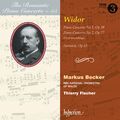
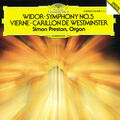
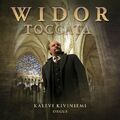
Charles-Marie Widor, born Charles-Marie Jean Albert Widor on February 21, 1844, in Lyon, France, died March 12, 1937, in Paris, France, was a French organist, composer, and music educator. After studying organ under Jacques-Nicolas Lemmens and composition under François-Joseph Fétis in Brussels, Widor returned to Lyon before moving to Paris. In January 1870, Widor was appointed organist at the Église Saint-Sulpice in Paris, a post he held for 63 years until December 1933. Widor pioneered the organ symphony genre, composing ten organ symphonies, including Op. 13 (Nos. 1–4) in 1872 and Op. 42 (Nos. 5–8) in 1879–1887—featuring the famous “Toccata” movement from Organ Symphony No. 5—alongside Symphonie gothique in 1895 and Symphonie romane in 1900. In 1890, Widor succeeded César Franck as organ professor at the Paris Conservatoire, later becoming professor of composition in 1896, teaching students including Marcel Dupré, Louis Vierne, Darius Milhaud, Arthur Honegger, Edgard Varèse, and Albert Schweitzer. Widor was appointed Chevalier of the Légion d'honneur in 1892, rising to Grand-Officier in 1933, and was elected permanent secretary of the Académie des Beaux-Arts in 1914. Widor died at age 93.