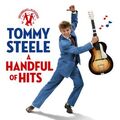
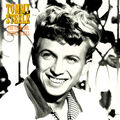
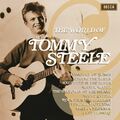
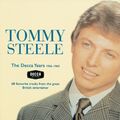
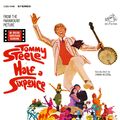
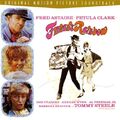
Thomas Hicks, better known by his stage name Tommy Steele, was born in 1936 in London, England, and is regarded as Britain's first teen idol and rock and roll star. Discovered performing at Soho's 2i's Coffee Bar, he was quickly signed to Decca Records, and his debut single, "Rock with the Caveman" (1956), became one of the first British rock and roll hits. His third single, "Singing the Blues" (1957), reached Number 1, and that same year he starred in a dramatised film of his own rise, The Tommy Steele Story (1957), whose soundtrack became the first British album to top the UK charts. Steele kept up a steady run of hits through the late 1950s, including "Elevator Rock" (1956), "Water, Water" (1957), "Shiralee" (1957), "Princess" (1958), "The Only Man on the Island" (1958), and "Nairobi/Neon Sign" (1958), establishing him as one of the defining voices of Britain's early rock scene. His success also extended to film, with soundtrack albums for The Duke Wore Jeans (1958) and Tommy the Toreador (1959), the latter producing the hit "Little White Bull". Throughout the 1960s, Steele gradually moved away from his rock and roll image, becoming an all-round entertainer. He built a significant career in stage and film musicals, appearing in The Happiest Millionaire and Finian's Rainbow, and originating the role of Kipps in Half a Sixpence in the West End, on Broadway, and in the 1967 film version. His continued relevance was reflected decades later, when the compilation The Very Best of Tommy Steele (2009) reached the UK Top 40, marking his first chart entry in over 46 years.