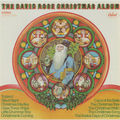
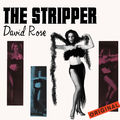
David Daniel Rose, born June 15 1910 in London, England, was a British‑American composer, arranger, pianist and orchestra leader whose career bridged swing, pop and television music. Raised in Chicago after his Jewish family emigrated, Rose began performing at sixteen with Ted Fio Rito's band and later became a standby pianist for NBC Radio, where he first arranged for the Frank Trumbauer orchestra and led a house band at WGN. His early swing originals such as "Break It Down" and "Transcontinental" earned him recognition, and he gained a national platform with the twice‑weekly California Melodies radio show on the Mutual Broadcasting System, where he eventually became music director. Rose's first commercial success came with the instrumental "Holiday for Strings", released in 1944 and reaching number 2 on the U.S. singles chart; the piece became the theme for Red Skelton's radio and television programs. In 1957, his rendition of Larry Clinton's "Calypso Melody" became a million‑selling record and earned a gold disc. The 1962 single "The Stripper" – composed in 1958 for a burlesque‑themed TV special – topped the U.S. singles chart, establishing Rose as a pop composer capable of crossover hits. Throughout the 1950s and 1960s he released a steady stream of albums for MGM and other labels, including Holiday For Strings (1947, 1952, 1958, 1967), Nostalgia (1954), The David Rose Christmas Album (1968), Spectacular Strings (1961), and the thematic Exodus and Other Great Themes (1961), among many others. His work extended to film scores for titles such as Bright Road (1953), Confidentially Connie (1953), and Operation Petticoat (1959), and he composed music for television series including Bonanza, Little House on the Prairie (1979, 1982), Highway Patrol, Highway to Heaven, and The Red Skelton Show, earning four Emmy Awards for his television compositions, among them a 1971 Emmy for Bonanza. Rose also contributed music to The Tony Martin Show and, in 1955, was commissioned to score MGM's Forbidden Planet, though he was later replaced by the Barrons. Beyond his studio and broadcast output, Rose worked with prominent performers such as Judy Garland – marrying her in 1941 – acted as musical director for Red Skelton for 21 years, and maintained a popular live‑steam hobby, building a backyard railroad. He died of a heart attack on August 23 1990 in Burbank, California, at age 80, and was interred at Mount Sinai Memorial Park Cemetery in Hollywood Hills. His legacy endures through continued reissues of his string arrangements, the popularity of "The Stripper" and "Holiday For Strings", and the preservation of his extensive television and film scores within the American music canon.