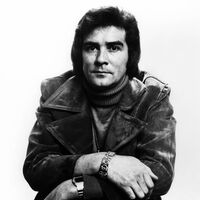
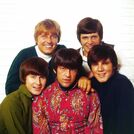
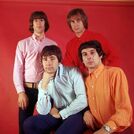
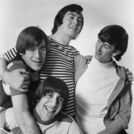
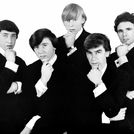
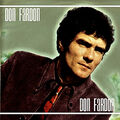
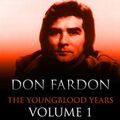
Don Fardon was born on August 19, 1943, in Coventry. His real name is Donald Maughn, and he is one of the British pop and beat singers who helped shape the transition from the beat era to the international pop hits of the late 1960s and early 1970s. His career began as the lead singer of the Coventry band The Sorrows, a group associated with the British freakbeat scene. In addition to Don Fardon, the band’s well-known members included Pip Whitcher, Vic Brown, Philip Packham, and Richie Gottehrer—who served as a key supporter during the band’s early years—though the lineup varied depending on the period. With The Sorrows, he scored a UK hit in 1965 with “Take a Heart”, which reached No. 21. Don Fardon took off as a solo artist in the late 1960s. In 1967, he reached No. 34 in Germany with “The Letter”. His biggest hit came in 1968 with “Indian Reservation (The Lament of the Cherokee Reservation Indian)”. The single reached No. 20 in the U.S., No. 3 in the U.K. in 1970, and No. 9 in Germany in 1971. This brought Don Fardon international recognition. In 1970, he released “Belfast Boy”, a tribute to soccer star George Best, which reached No. 32 in the UK. In 1971, “Follow Your Drum” entered the charts in Australia. In 1973, “Delta Queen” once again made it into the U.S. charts. At the same time, Don Fardon released several albums, including Lament of the Cherokee Indian Reservation (1968), The Love Story of Don Fardon (1969), I’ve Paid My Dues (1970), Released (1970), and Don Fardon and the Gang on Tour in Scandinavia (1971). Later releases consisted primarily of reissues and compilations such as Indian Reservation (1988), Line Dance Party (1998), I’m Alive (2003), Letter (2005), Coventry Boy (2006), and most recently the comprehensive anthology I’m Alive: The Anthology 1967–1974 (2024).