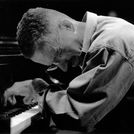
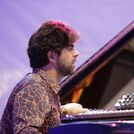
Nicknamed the "Bach of Berlin" or the "Bach of Hamburg", Carl Philipp Emmanuel Bach was the third son of Johann Sebastian Bach and his first wife Maria Barbara Bach. Born in Weimar on March 8, 1714, he was taught by his father at Leipzig's Thomasschule, then studied law at the city's university and in Frankfurt, before devoting himself to music. In 1733, he found a position as organist in Naumburg, and regularly played the clavichord - his instrument of choice - as well as the violin and the violetta (a small viola da gamba). Informed of his vocation, the Crown Prince of Prussia, Frederick II, invited him to join his court musicians as harpsichordist at Rheinsberg Castle. He accompanied the regent's son, known as an excellent flautist trained in composition, to concerts and festivities. When Frederick the Great came to power in 1740, he appointed the young Bach first harpsichordist at the Sanssouci Palace in Potsdam, where the monarch had set up his court. Carl Philipp Emmanuel Bach remained in this position for twenty-six years. He composed the Prussian Sonatas (1742) in honor of the king, and the Württemberg Sonatas (1744) for the Duke of Württemberg, which were to have a major influence on the development of keyboard playing. The Sonates avec reprises variées (1760) were also born of his reflections, and he also wrote an important treatise, Versuch über die wahre Art das Klavier zu spielen(Essay on the true art ofplaying keyboard instruments), published in two volumes (1753 and 1762, translated into French in 1979), which proves to be a first-hand source on instrumental practice in the first half of the 18th century. Married to Johanna Maria Dannemann in 1744, they had three children, including the painter Johann Sebastian Bach, known as "the Younger", who went on to become a well-known painter (he died at the age of 29 during a trip to Italy in 1778). When his father died in 1750, Carl Philipp Emmanuel Bach had to look after his younger half-brother Johann Christian Bach (1735-1782), who was continuing the musical education begun by their father. Dissatisfied with his salary, which he considered insufficient, C. P. E. Bach began looking for a more remunerative position. He applied to Zittau, then Leipzig, which resulted in an adjustment of his salary, but another problem arose: successive wars waged by Frederick II reduced musical activity, and when a Russian invasion threatened, he had to seek refuge in Zerbst, with his friend Carl Friedrich Christian Fasch, who was to succeed him at court, for in March 1768, Bach was appointed to the post of musical director of the city of Hamburg, taking over from his godfather Georg Philipp Telemann. In addition to his role as cantor at the Johanneum, he was also musical director of five churches. He remained in this principal role until his death from lung disease on December 14, 1788, at the age of 74, performing works such as Handel's Messiah, his father's Mass in B and Haydn's Stabat Mater. He composed a great deal of instrumental music himself, for keyboard alone: six collections of Sonatas, rondos and fantasias for connoisseurs and amateurs published between 1779 and 1787; duos, trios and quartets for strings and woodwinds; some twenty symphonies, including six for strings for Baron Van Swieten (1773) and four for orchestra (1780); some fifty keyboard concertos, of which he was a pioneer, and others for flute, oboe, cello or organ with orchestra; numerous pieces for flute, viola da gamba, oboe, clarinet, cello, harp; duets for flute and violin or two violins. Vocal works include a Magnificat (1749); two oratorios: Die Israeliten in der Wüste(The Israelites in the Desert, 1768-69) and Die Auferstehung und Himmelfahrt Jesu(The Resurrection andAscension of Jesus, 1778); twenty-two Passions ; cantatas and around three hundred lieder. A first edition of his works by C. Crebs was published in Leipzig in 1895. Ten years later, the musicologist Alfred Wotquenne assigned them a numbering system with the initials Wq, still in use today, although a new repertory was established in 1989 by Eugene Helm, with the initial H. Performers such as Gustav Leonhardt, Philippe Herreweghe, Andreas Staier, Edna Stern and Amandine Meyer have made recordings on the composer's instruments. Stylistically, C.P.E. Bach was an essential link in the transition between the Baroque tradition and the new Classical manner, emancipating himself from the imposing figure of his father and abandoning polyphony in favor ofEmpfindsamkeit ("intimate expressiveness"), with the motto: "A musician can only move if he is moved himself", prefiguring Romanticism in the expressiveness of playing, its theatricality and dynamic contrasts, made possible by the clavichord or fortepiano. He developed the sonata form created by his brother Wilhelm Friedemann Bach and used the minor keys that the Romantics loved, creating in the ambitious Prussian Sonatas and Württemberg Sonatas the effect of "calculated surprise" between flowing and rhythmic movements, adapted to the modern piano as demonstrated by Keith Jarrett. Later Sonatas, Rondos and Fantasias explore modulations and create space for improvisation, particularly in the C major Fantasy, Wq. 61/6. Admired by Josef Haydn, who worked on his works as much as Mozart and Beethoven, his Concerto in D minor, Wq. 23 (1748) remains a milestone in the history of the genre for its dialogue between soloist and orchestra; the equally innovative "Hamburg" Symphonies, Wq. 182 (1773), express his principles of dramatization and ruptures on an orchestral scale. All these elements give an idea of his importance over a large part of the 18th century. More famous than his brother Wilhelm Friedemann Bach, and today more played and recorded than his younger brother Johann Christian Bach, most of C.P.E. Bach's works were published during his lifetime, and he remained the guarantor of the family archives, leaving original documents including many scores at his death.