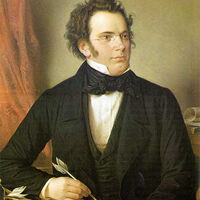
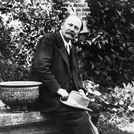
Born in Himmelpfortgrund, a suburb of Vienna, on January 31, 1797, Franz Peter Schubert was the twelfth child of a Moravian schoolteacher and a Silesian maid, but only three eldest survived, including Ignaz, who gave him his first music lessons on piano, violin and viola. From an early age, the youngest son showed surprising talent, and was entrusted to the Lichtenthal parish organist, Michaël Holzer. In 1808, at the age of eleven, the young Schubert was sent to the Stadtkonvikt, a singing school for members of the imperial court chapel, where his teachers included Wenzel Ruzicka and Antonio Salieri. During his time at the school, Schubert composed almost a hundred works, from the Fantasy in G* to his first Symphony, including ten string quartets, trios, a wind octet, overtures, sacred pieces and an unfinished opera, Der Spiegelritter, but very few lieder. In 1813, he left the Konvikt and prepared to teach at his father's school. Within three years, his catalog expanded to include five symphonies, four masses, three string quartets, three piano sonatas, six operas, including Des Teufels Lustschloss, and, among three hundred Lieder, the cycles Gretchen am Spinnrade(Daisy at the Spinning Wheel) and Erlkönig(The Alder King), after Goethe, his first masterpieces laying the foundations of the Romantic Lied. At the parish, he fell in love with a chorister, Thérèse Grob, for whom he composed a Mass in F major D.105, which he conducted himself. However, his beloved broke off the engagement in 1819. Meanwhile, Schubert surrounded himself with poet friends such as Johann Mayrhofer and Franz von Schober, with whom he stayed, and court baritone Johann Michael Vogl, who performed the fabulous lieder of 1817, Der Wanderer, An die Musik, Die Forelle ("The Trout"), Memnon, Ganymede, Gruppe aus dem Tartarus and Der Tod und das Mädchen ("The Maiden and Death"). In the wake of Mozart, before the discovery of Beethoven, his own style germinated, to which an adjective linked to his name, "Schubertian", was also attributed. His privately performed Symphony no. 5 D.485, Piano Sonatas D.537, D.568 and D.575, and Symphony no. 6 D.589 date from this period. In March 1818, his Overture in C major was his first orchestral work to be performed in public in Vienna. The following summer, Schubert left his post as a schoolteacher after four years' service, and became independent. He worked briefly as musical tutor to Count Esterházy's family in Zélesz, Hungary, then returned to Vienna, where in autumn 1819 he completed the famous Piano Quintet in A major, known as "The Trout", the first work of his maturity. Schubert was the first completely independent musician in history to live solely from the publication of his works and from lessons, and he faced frequent financial difficulties, staying with his brother Ferdinand or friends and returning twice to his father's house. Commissions were also welcome, such as the singspiel Die Zwillingsbrüder ("The Twin Brothers") and the incidental music for Die Zauberharfe ("The Enchanted Harp"), premiered in 1820 at two rival theaters. An opera begun with Schober, Alfonso und Estrella, was left unfinished. In 1823, he composed Fierabras with librettist and theater director Josef Kupelwieser, but the project never saw the light of day. Finally, another commission from the Theater an der Wien, Rosamunde, premiered on December 20, 1823, but disappeared after a second performance. Schubert did not confine himself to opera, composing among other works the oratorio Lazarus (1820), a fifth Mass in A-flat (1822) and two major unfinished works: the Quartettsatz of 1820 and the "Unfinished" Symphony of 1822, of which two movements and sketches of the Scherzo survive. Why such a composition was abandoned remains a mystery. At the time, the composer was suffering from the first symptoms of a venereal disease, and his condition did not improve until the following year. In 1823, he also completed his magnificent Die schöne Müllerin lieder cycle. In March 1824, his friends in the Schuppanzigh Quartet premiered the Quartet in A minor, and two months later, Schubert returned to Zélesz, Hungary, from which he brought a Sonata for four hands D. 812, also called Grand Duo, and a passion for Countess Caroline Esterházy, but his advancing illness prevented him from harboring any hopes. In the summer of 1825, he embarked on a tour of Upper Austria and the Tyrol with his friend Vogl, during which he conceived the idea for his Symphony no. 9 in C major, known as the "Great", which he offered in private audition to the Gesellschaft der Musikfreunde before being premiered by Felix Mendelssohn in 1839. In his later years, masterpieces included theF major Octet and String Quartet "Death and the Maiden" D.810, and the A minor Sonata "Arpeggione " D.821. in 1824, the unfinished Piano Sonata D.840 ("Reliquie") in 1825, the Sonata No. 18 in G major D.894 and the Quartet in G major D.887 in 1826, and the Impromptus for piano D.899 and D.935 in 1827. The same year saw the release of the wonderful lieder cycle Die Winterreise D. 911 ("The Winter Journey"), based on poems by Wilhelm Müller. On March 26, 1828, Schubert gave a concert in his honor, featuring the String Trio in E-flat D.929, alongside lieder and choral works. In his last year, Schubert wrote the Fantasy in F minor D.940, dedicated to Caroline Esterházy, the Rondo in A major D.951, the Mass no. 6 D.950, and the last three Piano Sonatas in C minor (D.958), A major (D.959) and B flat (D.960). He also completed the Quintet in C D.956 and a final lieder cycle, the aptly named Die Schwanengesang D.957 ("The Swan Song"), based on texts by Ludwig Rellstab, Heinrich Heine and Johan Gabriel Seidl. But he was unable to complete Symphony No. 10, which remained in draft form. On November 19, 1928, Franz Schubert died at the age of 31, leaving behind some 1,000 works, collected in a catalog compiled by musicologist Otto Erich Deutsch, who gave the initial of his name to each opus number.