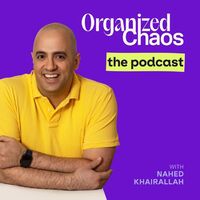
Organized Chaos is a podcast dedicated to helping 7-figure companies grow to 9-figure ones by turning HR into rocket fuel for their growth. I'm your host Nahed Khairallah, and I've been helping companies do just that for more than a decade. In each episode, I'll dive into HR topics that have a significant impact on your company's growth and leave you with actionable advice that will help your business reach its full potential.
Fractional executive job postings have grown over 400% since 2020 according to LinkedIn's Workforce Report. That is a structural shift in how startups build leadership teams, and it changes the math on almost every hiring decision you will make for the next 5 years.This episode is personal. I run a fractional HR practice and I have done this work across dozens of startups, and I have a clear perspective on what works, what does not, and where the model is heading. I am also honest about the limitations that most people in the space don't talk about.I share my thoughts and observations from 15+ years offering fractional HR services and close with a 5-step playbook for founders who want to hire fractional leaders.
6/29/26 • 15:51
Most startup HR dashboards are noise. In this episode, I explain why the metrics built for enterprise HR teams fall apart at startups and what to track instead.I walk through the 5 metrics every startup under 100 employees should actually track. Each one comes with a benchmark range pulled from credible sources, plus the formula and a real example from my work.I also talk about how to set benchmarks with zero historical data, and how to translate HR metrics into the language CEOs and boards respond to.Finally, I'll leave you with a 5-step plan you can execute this week to start using these 5 metrics.Join the Organized Chaos Newsletter: https://organizedchaos.fyi/newsletters
6/15/26 • 15:56
The AI hype on LinkedIn is not written by people who have run HR at a 50-person startup. In this episode, I take on the consultants, influencers, and vendors pushing the idea that you are falling behind if you have not adopted 15 AI tools yet.I sort startup HR AI use cases into 3 categories: Real and useful today, Promising but wait, and Pure hype at your stageI'll also leave you with the playbook for a solo HR person who wants to implement AI but doesn't know where to start.
6/1/26 • 17:32
In this episode, I answer a listener question about how to design a performance review that actually works, and whether peer feedback and 360s are worth the effort. After building performance systems for around 50 startups, my honest take is that peer feedback is conditional. It can drive real behavior change, or it can turn into a polite round of compliments nobody believes. The difference comes down to how you build it, and what sits underneath it.I walk through what performance management is really for, where most reviews break down, and a framework I call the Trust Stack: the four parts you need in order before any review system holds up.What I CoverThe three questions every performance system has to answer, and what happens when reviews lose track of themHow to define good and bad performance using observable behaviorsThe three main reasons reviews failWhy a feedback culture has to exist before any review system can workThe conditions that make peer and 360 feedback usefulThe Trust StackWork With MeIf you want help building a performance system that your team actually trusts, the work I do inside an HR Sprint covers exactly this. Book a free diagnostic call here: https://bit.ly/4lgwLXWSend Me a QuestionDo you have a question that you’d like me to answer on the podcast? You can reach me at hello@organizedchaos.fyi or message me on LinkedIn.
5/18/26 • 18:20
Every growing startup hits a wall around 50 employees. Most founders don't see it coming.In this episode, I tell the story of a company I joined at employee 12 that I no longer recognized 9 months later. From growth alone.I break down why 50 is the number, the three things that consistently fail at that scale, and what you should be building between 20 and 40 employees if you want the company to survive.Download the Startup HR Survival Guide: https://bit.ly/startup-hr-survival-guide
5/5/26 • 15:37
In this episode, I break down why the traditional resume-driven hiring process fails at startups and what to do instead. Resumes were designed for large corporations, and research from Harvard Business School shows that degree requirements alone screen out over 60% of qualified workers.I walk through what skills-based hiring actually looks like in practice, starting with rewriting job descriptions around outcomes rather than credentials, replacing resume screens with short practical exercises, and using structured interviews with defined rubrics. I share real examples from startups I have worked with, including one that cut its mis-hire rate from 40% to under 15% after making the switch.I also cover the four assessment methods that work best for small teams: work sample tests, structured behavioral interviews, paid trial projects, and skills-focused reference checks.For anyone facing resistance internally, I lay out a practical playbook for getting buy-in from skeptical founders by leading with cost data, proposing a pilot, and removing friction from the process.Subscribe to the podcast wherever you are listening. Visit https://organizedchaos.fyi for more resources, templates, and to book a free consultation on implementing skills-based hiring at your company.
4/20/26 • 18:34
In this episode, I break down what I call the minimum viable HR tech stack, the exact approach I use with my clients to determine which tools they actually need, when they need them, and where every dollar of their HR tech budget should go.I walk through four stages of growth and what your HR infrastructure should look like at each one:< 50 employees50 to 150 employees150 to 300 employees300 to 500 employeesIf you are looking at your current stack and realizing it needs work, or building one from scratch and want to get it right the first time, check out my HR Sprints: https://organizedchaos.fyi/hr-sprintsSubscribe to the Organized Chaos newsletter for more insights on building HR infrastructure that scales with your company: https://organizedchaos.fyi/newsletter
4/6/26 • 25:40
Join The Startup HR Operating System Early Access here.In this episode, I challenge the conventional thinking around company culture in startups. Most founders either treat culture as a side project they will get to eventually, delegate it entirely to HR, or try to build something that appeals to everyone. All three approaches are wrong, and all three are expensive.Using real-world client stories and hard numbers, I break down why culture is one of the most important responsibilities a founder carries from day one, why HR enables culture but leadership owns it, why you need to be ruthless about removing anyone who violates your cultural norms regardless of their performance, and why your culture should be deliberately designed to repel anyone who is not a good fit.If you are a founder or startup leader trying to build a culture that actually scales, this episode will push you to rethink your entire approach.Visit organizedchaos.fyi and subscribe to the podcast newsletter to receive additional content.Got a Question or Topic Suggestion?Connect with me on LinkedInReach out by email
3/23/26 • 20:05
Book a free 30-minute HR diagnostic call here.In this episode, I break down the three HR mistakes that quietly destroy startups before they ever reach product-market fit; and how to fix them.First, I tackle the culture fit trap: why hiring people who think like you feels great early on but leaves your team unable to adapt when the market proves you wrong. I make the case for hiring for culture add instead and share what green and red flags actually look like during interviews.Next, I get into why most founders botch terminations, and how a single bad firing can cost you $200K in legal fees while sending your best people running. I walk through a minimum viable termination process that protects both the company and the culture.Finally, I dig into compensation and why stacking one-off salary negotiations without a framework creates pay inequity that silently drives top performers out the door. I lay out a four-part framework any founder can build in a couple of days.The common thread across all three: treating people ops as a "later" problem always costs 10x more than getting intentional about it now.Want the podcast delivered straight to your inbox along with exclusive content for subscribers only? Sign up at Organized Chaos.
3/9/26 • 21:32
Join The Startup HR Operating System Early Access here.In this episode, I unpack why most startup onboarding is quietly destroying retention, burning cash, and stalling productivity, and what to do about it.Using research, real-world examples, and a practical framework, I'll walk through how to transform onboarding from a rushed checkbox exercise into one of the highest-ROI systems in your company. You’ll learn where your current process is failing, how to fix it without drowning managers, and how to architect a shared accountability model that actually delivers results.Visit organizedchaos.fyi and subscribe to the podcast newsletter to receive additional content.Got a Question or Topic Suggestion?Connect with me on LinkedInReach out by email
2/24/26 • 21:52
Sign up to The Startup HR Operating System course Free Early Access here.In this episode, we dive into how startups can use intentional, data-driven workforce planning to protect their cash runway, avoid painful layoffs, and still grow strategically. Instead of defaulting to “just hire more people” when things get busy, we break down how to diagnose the real problem, when hiring is actually the right answer, and how to quantify the true cost and impact of every new role.You’ll learn the key metrics every founder and HR leader should be tracking, how to distinguish between capacity and capability hiring, and how to build a hiring framework that keeps your organization lean, focused, and resilient—especially in volatile markets. If you’re scaling a startup and want to avoid bloated headcount, unnecessary spend, and reactive layoffs, this conversation is for you.In This Episode, We Cover:Why reactive hiring is so dangerous for startupsHow “growth at all costs” and copycat org charts lead to bloated teams.The hidden risks of building for the peak and then being forced into mass layoffs when the market turns.Why headcount is one of the hardest costs to unwind once it’s added.The real cost of every new hireUnderstanding fully loaded cost per employee (salary, benefits, taxes, tools, equity, and overhead).How to think in terms of runway and how many months of cash each incremental hire consumes.Why a few “nice-to-have” hires can quietly eliminate your margin for error in a downturn.Critical metrics for workforce planningRevenue per employee: what it tells you about efficiency and when it’s a red flag.Payroll as a percentage of revenue: how to use it as an early warning signal.How to use these numbers to push back on “we just need more people” requests with data.When headcount isn’t the answerHow many hiring requests are actually process problems in disguise.Questions to ask before approving any role: Is this a volume issue, a workflow issue, or a skill gap?Examples of issues that can be solved with automation, better prioritization, or redesigning work instead of hiring.The math of unnecessary hiresHow adding even a handful of non-essential roles compounds over time.The way non-critical hires can force painful tradeoffs later: cutting critical talent, slashing initiatives, or emergency layoffs.Why disciplined restraint on hiring is one of the strongest forms of risk management.Capacity vs. capability hiringCapacity hires: when the work is clear, repeatable, and you need more people to do the same thing.Capability hires: when you need new skills to unlock growth, build a new motion, or change how the business operates.How to evaluate which type of hire you’re making—and why confusing the two leads to misaligned roles and wasted budget.A framework for purposeful hiringDefining the precise business problem the role solves and how you’ll know it’s working.Tying every role to a clear strategic objective, revenue driver, or critical risk mitigation.Writing lean, outcome-based job definitions anchored in measurable value, not vague responsibilities.Implementation and ongoing disciplineHow to integrate workforce planning templates into your operating rhythm.Auditing existing teams to identify misaligned roles, low-value work, and opportunities to redesign instead of add.Tracking your workforce metrics over time so you can make timely, data-backed decisions rather than reactive cuts.Long-term payoff of disciplined workforce planningBuilding a resilient, right-sized team that can weather market volatility.Reducing the likelihood of whiplash cycles of hyper-hiring and mass layoffs.Creating a culture where headcount is seen as a strategic asset, not a default solution to every problem.Who This Episode Is ForStartup founders and executives responsible for runway, burn, and growth.People and HR leaders who want to move from reactive backfilling to strategic workforce planning.Finance leaders and operators who need a structured way to challenge and validate headcount requests.Visit Organized Chaos and subscribe to the podcast newsletter to receive additional content.
2/10/26 • 27:32
In this episode, I talk with Barbara Wittmann, founder of Digital Wisdom Collective, about why so many digital and AI initiatives quietly fail, and what it really takes to make transformation stick.We go beyond tools and platforms to explore the deeper system of people, structures, and culture that Barbara calls “human infrastructure”, and why this matters even more in startups where the pace is fast and the margin for error is thin.Main Topics We CoverWhy Digital Transformation Fails (Even with Great Tech): How organizations keep treating transformation as an IT project, and the recurring people and structure patterns behind failure.Human Infrastructure as a Strategic Asset: What “human infrastructure” actually means—mindsets, capabilities, relationships, and learning rhythms—and why it should show up as its own budget line item.The Real Role of Middle Management: Why change “starts in the middle,” how middle managers become the load-bearing walls of any transformation, and what happens when they’re bypassed or underpowered.AI Without the Hype (and Without Panic): The difference between responsible AI adoption and shiny-object chaos, including the reality that some roles will disappear—mostly the ones that never fully leveraged human capability—and how this is an opportunity to double down on work humans do best.HR and IT as the New Power Couple: HR and IT must operate as true partners in startups, co-owning outcomes, roadmaps, and the design of how people and technology evolve together.What Startups and HR Leaders Need to Do Differently: Concrete guidance for founders and HR leaders on aligning tech choices with business outcomes, building human infrastructure early, and avoiding “transformation theater.”LinksConnect with Barbara on LinkedInLearn more about Digital Wisdom CollectiveConnectVisit organizedchaos.fyi and subscribe to the newsletter for more conversations and exclusive content.Have thoughts or questions about this episode?Connect with me on LinkedInReach out by email
1/27/26 • 36:57
In this episode, I sat down with Nikki Barua to explore what it really takes to build a long‑term company in the age of AI. Together, we unpack when it makes sense to bootstrap versus raise capital, how misaligned investors can quickly push out founders, and why many businesses would be healthier if they grew more patiently instead of chasing funding as a badge of honor.The conversation then turns to who should own AI enablement (IT vs HR), why putting AI solely in IT is a red flag, and how to rethink headcount: not as “how many jobs can we cut,” but as “which tasks and roles can AI absorb so humans can move into higher‑value work.” Links:Nikki Barua's LinkedIn profile: https://www.linkedin.com/in/nikkibaruaFlipWork website: https://www.flipwork.ai/Visit organizedchaos.fyi and subscribe to the newsletter to receive additional exclusive content.Got a Question or Topic Suggestion?Connect with me on LinkedInReach out by email
1/13/26 • 37:41
In this episode of the Organized Chaos podcast, I explore profit sharing as a strategy for business growth with my guest Rob Gallagher, CEO of Profit X.Rob shares his journey from an unplanned construction business owner to a seasoned entrepreneur advocating for strategic profit sharing. He illustrates how aligning employee and organizational goals can transform company culture and drive explosive growth. Through personal anecdotes and insights, Gallagher emphasizes the importance of clarity and setting clear expectations in profit sharing, warning of initial pitfalls and highlighting the model’s potential to evolve companies into powerhouse businesses.Links:Rob Gallaher's LinkedIn profile: https://www.linkedin.com/in/robertgallaherProfitX website: https://profitx.coProfit Sharing book: https://a.co/d/bgTgdskVisit organizedchaos.fyi and subscribe to the podcast newsletter to receive additional content.Got a Question or Topic Suggestion?Connect with me on LinkedInReach out by email
12/30/25 • 31:03
In this episode, I am joined by Halisi Tambuzi, J.D., an expert in HR workplace investigations, to demystify the often-intimidating world of HR compliance for startups. Many early-stage companies place HR on the back burner, but as Halisi explains, this can lead to significant legal, financial, and cultural consequences. We dive into the practical steps founders and leaders can take to build a compliant and resilient organization from the ground up.This conversation is a must-listen for any startup founder, leader, or aspiring entrepreneur who wants to understand the "when" and "how" of implementing HR best practices without breaking the bank.In this episode, you’ll learn:Common HR Blind Spots for Startups: Why are small companies and startups particularly vulnerable to HR compliance issues? We break down the common misconceptions and challenges they face.The Right Time to Focus on HR: Is it after the first hire? The tenth? The twentieth? We identify the key milestones and triggers that signal a startup must prioritize creating HR infrastructure.The High Cost of Non-Compliance: We explore the tangible risks—from legal liabilities and costly investigations to damage to company culture and morale—that come from neglecting HR compliance.Lean HR Strategies: Discover how resource-constrained startups can effectively manage HR needs through smart strategies like fractional HR support and leveraging the right technology.Avoiding Workplace Conflicts: We share insights into the most frequent mistakes that lead to internal investigations and how proactive HR policies can prevent them.The Future of HR: A look at how emerging trends like artificial intelligence and the permanence of remote work are reshaping the landscape of HR compliance and presenting new challenges for employers.Guest InformationHalisi Tambuzi, J.D., is a seasoned expert in workplace investigations and HR compliance. With a background that bridges law and human resources, she provides critical guidance to companies to help them foster fair, respectful, and compliant work environments.LinkedIn: https://www.linkedin.com/in/halisi-tambuzi-j-d-657b7227/Company Website: https://wpihr.com/Visit organizedchaos.fyi and subscribe to the podcast newsletter to receive additional content.Got a Question or Topic Suggestion?Connect with me on LinkedInReach out by email
12/16/25 • 39:23
In this episode of Organized Chaos, I am joined by Gwenevere Crary, founder of Guide to HR and host of the "Scaling with People" podcast. Gwenevere is a strategic visionary in the HR world and she shares her forward-thinking approach to AI-enabled HR strategies and the unique challenges startups face as they scale.Key Topics DiscussedGuinevere's Journey to HR: From a background in actuarial mathematics to leading people operations in high-growth startups.AI Enablement in HR: How to leverage AI to automate tasks you hate and augment your own skills, whether in writing or data analysis.The Future of HR with AI: A look at advanced AI applications, including a 24/7 AI coach for managers that facilitates role-playing for difficult conversations and tracks employee development goals.New Skills for HR Professionals: The need for HR leaders to possess deep business acumen, understand company financials, and think like a business operator. The traditional, admin-heavy HR role is obsolete.Challenges in Scaling Startups: Advice for HR professionals on how to gain credibility, present themselves as strategic partners, and build crucial relationships with leadership.HR's Role in Owning Technology: Why HR is positioned to own AI implementation, ensuring its use is safe, unbiased, and effective for the entire organization.The Hard Truth: Knowing when to leave a role if you no longer have the trust and alignment with leadership to be effective.LinksConnect with Guinevere on LinkedIn.Learn more at Guinevere's website: guidetohr.comTake the free AI Readiness Assessment to see where you and your organization stand.Listen and subscribe to the Scaling with People Podcast.Visit organizedchaos.fyi and subscribe to the podcast newsletter to receive additional content.Got a Question or Topic Suggestion?Connect with me on LinkedInReach out by email
12/2/25 • 34:06
Episode OverviewIn this episode, I dive deep into how startups can turn chaotic, gut-driven hiring into a scalable, data-driven system that fuels high-growth.I'll break down a six-step framework for building a structured interview process that dramatically improves hiring accuracy and reduces bias. The episode includes a practical guide, actionable templates, and introduces an AI-powered tool for automating competency-based interviews.Key Topics and Discussion Points1. The Pitfalls of Traditional Interviews2. The Need for a Structured System3. Identifying Core Competencies4. Defining Proficiency Levels5. Formulating Effective Questions6. Writing Competency-Based Questions7. Developing a Scoring Framework8. Making the Hiring DecisionTools & ResourcesFree AI-Powered Interview Question Builder: Automatically extracts competencies from job descriptions and generates interview questions and rubrics based on the framework I discussed on the podcast.
11/18/25 • 17:11
In this episode of Organized Chaos, I am joined by Vijay Rajendran, an executive coach, advisor, and author who helps startup founders navigate their biggest challenges: fundraising, sales, and people management.You'll learn about:The Four-Phase Funding FrameworkPhase 1 - Storytelling: Moving beyond the pitch to craft a compelling narrative about your company's purpose and vision.Phase 2 - Organization: The importance of preparation, including having your data room and deck in order.Phase 3 - Strategic Outreach: Treating fundraising like an enterprise sale by targeting investors for whom your business is a perfect fit, avoiding the demoralizing "spray and pray" method.Phase 4 - Closing with Confidence: Why founders must aggressively project manage the closing process to avoid last-minute pitfalls.Founder-Led Sales and Product-Market FitHow to create a value proposition that speaks directly to what customers value (e.g., speed, cost savings) rather than just your own passion for the product.Identifying the early signs of product-market fit, where you feel a "pull" from the market.Scaling Teams and Organizational Structure:The common mistake of copying traditional corporate org structures and the importance of designing a structure that enables your specific business strategy.The evolution of a founder from "Chief Everything Officer" to a "Chief Enablement Officer."Building a Resilient Company Culture:Culture isn't about handbooks; it's about intentionally designing how your team works together based on shared values and purpose.If you don't define your culture, it will form on its own and can lead to resentment and dysfunction.A company's culture must be aligned with its value proposition to the market to ensure long-term success.Resources Mentioned:Book: The Funding Framework by Vijay RajendranWebsite: mystartupsystem.comSubstack: My Startup SystemVisit organizedchaos.fyi and subscribe to the podcast newsletter to receive additional content.Got a Question or Topic Suggestion?Connect with me on LinkedInReach out by email
11/4/25 • 38:06
In this episode of Organized Chaos, I interview Daneal Charney, a seasoned HR executive and leadership coach who has been in the trenches with scaling startups.We dive deep into the challenges and best practices for scaling startups through effective leadership, founder-team fit, healthy conflict, and strategic HR. The episode features real anecdotes, examples, and actionable advice for founders and startup leaders.Key Discussion Topics:Introduction to Daneal Charney: Daneal’s journey from her early days in leadership development to consulting with startups, eventually founding her own company, 5X. She discusses her passion for leadership, coaching, and startup culture.Mindset of Startup Leaders: The conversation covers the critical “ownership” mentality required to succeed in a startup. Daneal emphasizes personal responsibility, growth, and being proactive in both individual contributor and leadership roles.Founder Stage Fit & Leadership Challenges: Insight into the concept of “founder stage fit,” the importance of aligning founder roles with company growth, and the difficulties many founders face when it's time to “pass the baton” as their business evolves.Team Dynamics and Conflict Management: Healthy conflict is crucial for scale. Daneal shares stories about radical candor, toxicity, and the costs of “obnoxious aggression.” She offers strategies for building cultures where healthy, open debate leads to better decisions.HR’s Role in Growing Startups: When is the right time to bring in an HR leader? They examine scenarios from fast growth and acquisitions to distributed teams and organizational transformation. The pros and cons of full-time, fractional, and operational HR models are discussed, along with advice for founders considering their first HR hire.Closing Reflections & Contact Info: Daneal provides guidance to HR professionals and coaches on being strong business advisors and business-centric in their mindset. She closes by sharing that she can be reached via LinkedIn for listeners who want to learn more.Links:Daneal Charney's LinkedIn: https://bit.ly/42YbydhVisit the Organized Chaos website for exclusive content and HR resources for scaling startups.
10/21/25 • 35:29
In this episode of the Organized Chaos Podcast, I welcome Katie Barnes to discuss the complexities of startup scaling and the common pitfalls that companies face. Katie is a seasoned expert with over 14 years of startup experience and currently the founder of Rise and Optimize.The discussion highlights critical areas such as founder bottlenecks, the power of SOPs, and the importance of bringing team members into the process.Links:Katie Barnes LinkedIn: https://www.linkedin.com/in/katie-barnes-operations-leaderRise and Optimize website: https://www.riseandoptimize.comKatie's Substack: https://riseandoptimize.substack.comVisit https://organizedchaos.fyi for exclusive content.
10/7/25 • 25:15
In this episode of the Organized Chaos podcast, the co-founders of Buddies HR, Fabian Pinel and J.Y Delmotte, share their unconventional journey from Y Combinator to a successful bootstrapped company. They discuss their early career as software engineers, their initial ventures in automation and influencer marketing, and the critical decision to build Buddies HR without seeking traditional venture capital. Fabian and JY emphasize the importance of understanding product market fit and the pitfalls of spending excessively before achieving it. Their experiences offer valuable insights for entrepreneurs navigating growth and market challenges.Links:BuddiesHR website: https://buddieshr.com/Fabien's LinkedIn: https://www.linkedin.com/in/fabienpinel/J.Y's LinkedIn: https://www.linkedin.com/in/jeanyves-delmotte/For more content, visit https://organizedchaos.fyi
9/23/25 • 31:07
In this episode, I explore six transformative trends that are fundamentally reshaping the HR landscape.The discussion covers how traditional, compliance-focused HR is being challenged by business leaders who demand more strategic value, while AI technology is automating much of HR's transactional work. I examine the growing convergence between HR and IT functions, the complete redesign of HR roles toward more strategic positions, and the trend toward smaller, more focused HR teams.We wrap things up with insights into the rise of fractional HR roles, where experienced professionals work part-time across multiple organizations.These changes represent a shift from administrative HR toward a more strategic, technology-enabled function that directly drives business outcomes.Whether you're an HR professional or business leader, this episode provides essential insights for navigating the future of people operations.Subscribe to the newsletter for exclusive content.
9/9/25 • 26:02
In this episode, I sit down with Mark Hunter, also known as The Sales Hunter, a globally recognized sales consultant and bestselling author. Mark shares his invaluable insights on the unique challenges and strategies for building and scaling a high-performing sales team within the dynamic environment of an early-stage startup.We explore the common pitfalls founders face, the essential traits to look for when hiring sales talent, and the critical role of company culture in driving sustainable growth. This conversation is packed with practical advice for any founder or leader focused on building a robust sales engine.Contact Mark Hunter:WebsiteLinkedInVisit organizedchaos.fyi and subscribe to the podcast newsletter to receive exclusive content.Got a Question or Topic Suggestion?Connect with me on LinkedInReach out by email
8/26/25 • 41:18
In this episode of the Organized Chaos podcast, I welcome Kristy Hissa, General Manager at Kairos, as we explore the pervasive issue of unproductive meetings, which can tie up to 70% of company payroll.Kristy shares her journey from a VP of Operations in startup land to becoming an entrepreneur tackling the meeting conundrum. With insights into the research that shows companies waste $2 million annually on unnecessary meetings, Kristy explains how Kairos aims to optimize meetings using AI.The conversation delves into the challenges and solutions around meetings, emphasizing the critical role of optimizing meetings in enhancing productivity and company performance.Connect with Kristy:LinkedInKairos websiteVisit Organized Chaos and subscribe to the podcast newsletter to receive additional content.
8/12/25 • 35:40
In this episode of Organized Chaos, I sit down with Mike White, a seasoned HR executive turned founder of Secchi, an innovative employee relationship management platform. Drawing from two decades of experience in major corporations like Caterpillar and Master Lock, Mike shares his journey and the insights that led him to tackle the pressing challenges of employee engagement and retention in the manufacturing sector.Key Topics:The Genesis of Secchi: Mike discusses his 20-year career in HR within factory settings, where he consistently observed the immense pressure and administrative burden placed on frontline leaders. Inspired by the need for a simpler, more effective way to manage workforce dynamics, he created Secchi. The name is inspired by the "Secchi disk," a tool used to measure water clarity, symbolizing the platform's mission to bring transparency to employee relations.From Corporate Leader to Startup Founder: The transition from a stable corporate role to the unpredictable world of startups was filled with surprises. Mike candidly shares the challenges he faced, including the unexpected risk aversion he encountered among fellow HR professionals and the steep learning curve of entrepreneurship. He contrasts the corporate world's reward for perfection with the startup's imperative to act quickly, learn, and iterate.The True Cost of a "Bad Apple": Mike delves into the critical importance of addressing underperforming or toxic employees. He argues that the common philosophy of "we just need someone" is detrimental to a healthy work environment and ultimately drives away top talent. Citing a powerful case study, he demonstrates how removing just a few negative influences led to a significant increase in productivity and a substantial reduction in costs for one of his clients, illustrating the principle of "addition by subtraction."Data-Driven HR: A recurring theme is the necessity of moving beyond anecdotal evidence and gut feelings in HR. Mike emphasizes that while factors like pay and training are important, the core driver of employee retention is the relationship between a leader and their team members. Secchi is designed to provide clear, actionable data on these interactions, enabling organizations to make informed decisions that genuinely improve the workplace.Advice for Aspiring Founders: For those considering the entrepreneurial path, Mike offers practical advice: validate your business idea thoroughly, be prepared to consume vast amounts of information, and don't be afraid to be shameless in promoting your vision. He speaks to the immense personal and financial risks involved but underscores the profound sense of purpose that comes from building something you believe in.This conversation offers a masterclass in the realities of building a business from the ground up, the nuances of effective workforce management, and the critical need for data-driven strategies in today's competitive landscape.Connect with Mike White:LinkedInSecchi websiteVisit organizedchaos.fyi and subscribe to the podcast newsletter to receive additional content.Got a Question or Topic Suggestion?Connect with me on LinkedInReach out by email
7/29/25 • 46:02
In this episode of the Organized Chaos podcast, I interview Anirudh Narayan, Co-Founder and Chief Growth Officer at Lyzr AI, a platform innovating the use of AI agents to automate business workflows.Anirudh shares insights from his journey and discusses the rapid evolution of AI technologies in business operations. While AI brings increased productivity, there's an ongoing debate about its role in HR, with some worried about losing the human touch. As AI becomes integral to business, understanding its potential and limitations is crucial for effective application.Key Topics Discussed:AI and Evolving Productivity Expectations: How the bar for output has risen with AI, shifting expectations for individuals and companies, and the realities of working “smarter, not less.”Anirudh’s Entrepreneurial Journey: Lessons learned in founding and scaling multiple ventures, including his transition into the AI space and leadership at Lizer AI.The Role of AI in Business Scaling: Practical frameworks for integrating AI into sales, marketing, and other business workflows. Insights on using AI for automation while retaining a vital human element.Challenges in HR with AI Implementation: Discussion on balancing technology with the human touch in HR. Exploring two camps: those eager to experiment with AI and those cautious about losing essential human connection.Guidance for Founders and Business Leaders:When to apply AI in business versus when to rely on peopleThe value of focusing on vertical markets for AI solutionsThe need for constant customer feedback and rapid iterationFuture of Work and AI: Thoughts on workforce changes, potential job displacement, regulation, and the rise of the “solopreneur billionaire” enabled by accessible AI tools.Connect with Anirudh Narayan:LinkedInLyzr company websiteVisit organizedchaos.fyi and subscribe to the podcast newsletter for exclusive content.Got a question or topic suggestion?Connect with me on LinkedInReach out by email.
7/15/25 • 41:30
In this episode of the Organized Chaos podcast, host Nahed Khairallah is joined by Tushar Makhija, co-founder of TeamOhana. Tushar shares his unique entrepreneurial journey, from his humble beginnings in India to building a successful workforce intelligence platform. The discussion delves into the challenges of scaling a business, the importance of a strong network, and the crucial role of people in a startup's success. Tushar also offers insights into common mistakes companies make in workforce planning and how TeamOhana helps address these issues by promoting alignment between different departments.Key Topics Covered:Tushar Makhija's Entrepreneurial JourneyChallenges of Building a Scalable BusinessThe Role of People in Startup SuccessCommon Mistakes in Workforce ManagementTeamOhana's Solution for Workforce IntelligenceRelevant Links and Resources:TeamOhana WebsiteTushar Makhija's LinkedIn profileVisit organizedchaos.fyi and subscribe to the podcast newsletter to receive additional content.Got a Question or Topic Suggestion?Connect with me on LinkedInReach out by email
7/1/25 • 43:10
In this episode, I had a great conversation with Annemarie Penny, Founder of Dreamore.Annemarie shared some fascinating insights from a 14-year study on startup founders and leaders. It really highlighted the different mindsets and personalities needed to thrive in a startup compared to a bigger, more established company. We explored what a healthy startup culture looks like – that "organized chaos" where different ideas, even the seemingly "stupid" ones, are encouraged to spark innovation and avoid everyone just agreeing with each other.We also dove into the common hiring mistakes that startup founders often make. We emphasized that you need to look beyond just a resume and really assess candidates based on their skills, measurable successes, their personal story, and how well they fit with the company culture. We discussed the idea of "hire slow, fire fast" versus investing in developing employees, and how crucial it is to set realistic expectations during the hiring process.We also spent some time talking about AI in recruitment. While AI tools can definitely help with things like screening resumes for skills and saving time, Annemarie and I both have concerns about candidates potentially using AI to misrepresent themselves, especially with remote and global teams. However, we agreed that AI can't replace the human element: the authenticity, the personal story, critical thinking, and learned experiences. If a hiring process can be "fooled" by AI, then the process itself needs improvement. We see AI as a tool that should allow recruiters and HR to focus more on connecting with people, understanding the nuances, and assessing things like empathy and experience.To wrap things up, Annemarie offered some valuable advice for first-time founders building their teams. She stressed the importance of taking care of yourself, being okay with not knowing everything (that vulnerability and fear are normal!), and attracting the right people by being authentic and bringing positive energy. What you put out there really does attract the kind of people you want to work with. And recognizing that you don't have all the answers and building a team that complements your strengths is key to success.Visit organizedchaos.fyi and subscribe to the newsletter for exclusive content and access to free resources.Got a Question or Topic Suggestion?Connect with me on LinkedInReach out by email
6/17/25 • 41:46
Entrepreneurship takes a significant mental toll, with 72% of entrepreneurs reporting mental health concerns according to research. The glamorous portrayal on social media contrasts sharply with the reality of 70+ hour workweeks, financial pressures, and personal sacrifices many founders experience.In this episode, I'll talk about the entrepreneur's struggle to maintain boundaries between work and personal life, leading to burnout and health issues. Entrepreneurship is a marathon, not a sprint, requiring sustainable practices that protect mental wellbeing while building a successful business.Key Learning PointsThe "9-to-5 entrepreneur" is largely a myth – most successful entrepreneurs work extensive hours and face immense pressure, especially those without financial safety netsImplement an "energy audit" to identify which activities drain or energize you, then delegate the draining tasksDelegation is crucial – outsourcing even 5 hours of weekly work can significantly improve mental health and business growth potentialSet firm boundaries around working hours and stick to them except for genuine emergenciesPrioritize physical wellbeing through consistent exercise and quality sleep to improve decision-making and productivityBuild a support network of fellow entrepreneurs who understand the unique challenges of building a businessSuccess isn't just about financial metrics but creating something sustainable without sacrificing your healthSubscribe to Organized Chaos to receive additional content and get notified when a new episode is published.Additional ResourcesAre Entrepreneurs "Touched with Fire"?What Makes Entrepreneurs Burn OutGot a Question or Topic Suggestion?Connect with me on LinkedInReach out by email
6/3/25 • 16:40
In this episode, host Nahed Khairallah speaks with Vanessa Gilardi about her journey as a global people leader who has navigated both corporate giants and nimble startups. Drawing from her experiences at companies like Moonpay and Blockchain.com, Vanessa reveals how HR functions differ fundamentally between large organizations and startups—with corporate environments offering structured processes but slower change, while startups demand entrepreneurial thinking and rapid value demonstration. Her career philosophy of prioritizing experience over titles resonates throughout as she emphasizes the importance of personal agency in developing adaptable skills for today's evolving workplace.As the discussion shifts to scaling organizations and AI's growing influence, Vanessa offers practical frameworks for HR leaders navigating global expansion, stressing the delicate balance of strategy, purpose, and culture. She shares optimistic yet pragmatic insights about AI's role in transforming HR, highlighting specific applications in meetings, career coaching, and learning development that are already showing value. Rather than viewing AI as a threat, Vanessa advocates for transparency and responsible implementation, suggesting that by focusing on uniquely human capabilities, professionals can thrive alongside technology in a workplace that ultimately becomes more fulfilling as mundane tasks are automated.Connect with Vanessa Gilardi on LinkedIn.Visit www.organizedchaos.fyi and subscribe to receive additional content.Got a Question or Topic Suggestion?Connect with me on LinkedInReach out by email
5/20/25 • 37:39