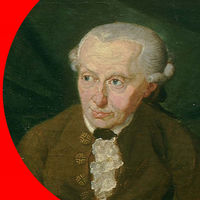
300 years ago Immanuel Kant was born - and I want to dedicate an extensive series of lectures to his whole philosophy. I spent the past year studying the 29 volumes of Kant's collected works and reading at least a 100 pages of Kant every day, in order to now provide the probably most comprehensive and most thorough presentation on his philosophy which has been attempted so far, to show its inner systematic relations and, most of all, to identify Kant's contribution to the aufklärung of humanity.
A sub field of rational theology, in which we try to have cognition of God through reason and without the help of any revelation, is transcendental theology. In this field all experience is transcended and we think about God through pure reason. This leads to deism, a conception of God according to which God is the necessary being and original force from which the world emanated, but not a conscious intelligence acting according to purposes which could be revered or loved. On transcendental theology therefore no religion can be built, however it is important for clarifying and correcting our concept of God.Quote: 0:08Transcendental theology: 0:41Ontotheology: 7:23- The God of ontotheology: Deism: 16:24- The use of ontotheology: 35:24- 1. Refutation of polytheism: 37:15- 2. Refutation of pantheism: 50:53- 3. Protection against anthropomorphism: 1:02:13- 4. Refutation of dogmatic atheism: 1:04:21- The ontological proof for God: 1:06:20- The refutation of the ontological proof for God: 1:18:54Cosmotheology: 1:57:03- The cosmological proof for God: 1:57:24- Cosmotheology is transcendental theology: 2:05:33- The God of cosmotheology: Pantheism and world cause: 2:14:04- The refutation of the cosmological proof for God: 2:22:23Conclusion: 2:30:08Thanks: 2:35:05Overview over theology according to Kant: https://jonathanivoloewer.de/wp-content/uploads/2026/07/theology-according-to-Kant.pngThe table of categories according to Kant: https://jonathanivoloewer.de/wp-content/uploads/2024/10/table-of-categories-according-to-Kant.jpgThe table of judgments according to Kant: https://jonathanivoloewer.de/wp-content/uploads/2024/10/table-of-judgments-according-to-Kant.jpgThe transcendental theology Kant discusses mostly in his lectures on rational theology: https://archive.org/details/kantsgesammeltes0000kant_r0k1/mode/2up, and also in his lectures on metaphysics: https://archive.org/details/kantsgesammeltes0028kant/mode/2up | https://archive.org/details/kantsgesammeltes0028kant_d7g2/mode/2up (I am not aware of a free English translation of either).Whoever is interested specifically in the two transcendental proofs for God and their refutation, should read the third main part of the dialectic of pure reason in the Critique of Pure Reason: https://www.gutenberg.org/files/4280/4280-h/4280-h.htm.Whoever wants to support my aufkläring work can do so via:https://ko-fi.com/jonathanivoloewerhttps://www.patreon.com/jonathanivoloewerhttps://www.paypal.com/donate/?hosted_button_id=VDDT7T7XHR77UThumbnail: www.hotpot.ai
9/5/26 • 155:35
The philosopher does not do revealed theology which presupposes believe in some divine revelation, but tries to have cognition of God through reason alone. Here he is met with the difficulty of how the finite creature may grasp the infinite creator, and most of all with the danger of sliding into anthropomorphism. Quote: 0:08Rational theology: 0:49The difficulty of the cognition of God and of anthropomorphism: 6:31How God can be talked about: 19:15Via eminentiae: 30:40Via negationis: 48:33Via analogiae: 1:09:45The fields of rational theology: 1:38:18Kant's architectonic: 1:44:12Thanks: 2:03:41The table of categories according to Kant: https://jonathanivoloewer.de/wp-content/uploads/2024/10/table-of-categories-according-to-Kant.jpgOveriew over metaphysics according to Kant: https://jonathanivoloewer.de/wp-content/uploads/2024/05/Metaphysics-according-to-Kant-scaled.jpgThe thinking faculty according to Kant: https://jonathanivoloewer.de/wp-content/uploads/2024/09/faculty-of-thinking-according-to-Kant.jpgOverview over theology according to Kant: https://jonathanivoloewer.de/wp-content/uploads/2026/07/theology-according-to-Kant.pngWhoever wants to get more in depth concerning Kant's theology and its method should study the lectures on rational theology: https://archive.org/details/kantsgesammeltes0000kant_r0k1/mode/2up, his lectures on metaphysics: https://archive.org/details/kantsgesammeltes0028kant/mode/2up | https://archive.org/details/kantsgesammeltes0028kant_d7g2/mode/2up also contain many remarks on rational theology (I am not aware of a free English translation of either).Whoever wants to support my aufkläring work can do so via:https://ko-fi.com/jonathanivoloewerhttps://www.patreon.com/jonathanivoloewerhttps://www.paypal.com/donate/?hosted_button_id=VDDT7T7XHR77UThumbnail: www.hotpot.ai
7/24/26 • 124:10
While religion is practical, theology is theoretical: A person's theology is the sum of the statements on God he considers to be true. These statements however theology can take from revelation or from reason. And here arises the conflict between the theological and the philosophical faculty on the way through which to gain cognition of God.Quote: 0:08The philosophy of religion is the crowning conclusion of Kant's philosophy: 0:29The contemporary neglect of philosophy of religion: 9:46Theology and religion: 24:29For true religion, correct theology is helpful but not necessary: 29:35Revealed theology and rational theology: 41:24The conflict of the theological and the philosophical faculty: 53:47Thanks: 1:26:18Of theology and the conflict between the theological and the philosophical faculty Kant talks in the first section of his Conflict of Faculties (I could not find a free English translation online).Whoever wants to support my aufkläring work can do so via:https://ko-fi.com/jonathanivoloewerhttps://www.patreon.com/jonathanivoloewerhttps://www.paypal.com/donate/?hosted_button_id=VDDT7T7XHR77UThumbnail: www.hotpot.ai
7/18/26 • 86:47
All moral action is working towards the realization of the highest good: A world in which people have happiness while also deserving it. But it is Kant's accomplishment to have shown two things: The highest good doesn't mark the beginning but the end of morality, we ought not to realize it because it is good, it is good because we ought to realize it. And the two halves of the highest good cannot be united in the sensual world - whereby it is pointing beyond, towards a supersensual world and forming a bridge from moral philosophy to the philosophy of religion. Quote: 0:08The highest good in Kant's philosophy: 1:15The highest good doesn't mark the beginning but the end of morality: 3:34The highest physical good: 18:15The highest moral good: 36:36The highest (ethical) good: 1:02:32The dialectic of practical reason: 1:18:55Ancient attempts at solving the dialectic: 1:23:50The highest physical and moral good are separated: 1:39:11The highest juridical good: 1:51:31Most of the time morality and prudence align: 2:03:58Most people are bad and prefer their adventage over morality: 2:09:27The common objections against Kant: 2:19:38Morality is to be prefered over one's own adventage: 2:33:08The solution of the dialectic of practical reason in religion: 3:02:17Thanks: 3:09:49The highest good Kant discusses in his Critique of Pure Reason: https://www.gutenberg.org/files/4280/4280-h/4280-h.htm and most of all in his Critique of Practical Reason: https://www.gutenberg.org/files/5683/5683-h/5683-h.htmWhoever wants to support my aufkläring work can do so via:https://ko-fi.com/jonathanivoloewerhttps://www.patreon.com/jonathanivoloewerhttps://www.paypal.com/donate/?hosted_button_id=VDDT7T7XHR77UThumbnail: www.hotpot.ai
7/11/26 • 190:18
Most people seek a passive happiness: Resting, indulging, receiving pleasure. Kant however is aware that there is also an active happiness: Being active, creating, bringing forth meaning.Quote: 0:08Kant teaches mostly a negative path to happiness: 0:20Possible sources of happiness: 8:48Passive & active happiness: 13:45Why activity is pleasurable: 35:28The active person doesn't only work but also rests or plays: 54:10The unity of all sages and philosophers on happiness and how today it is not discussed: 58:33Thanks: 1:19:42On activity and the happiness growing out of it Kant never talked comprehensively or systematically but rather made remarks in various places. It is recommended to study especially his lectures on his topic, both his lectures on metaphysics: https://archive.org/details/kantsgesammeltes0028kant/mode/2up | https://archive.org/details/kantsgesammeltes0028kant_d7g2/mode/2up as well as his lectures on anthropology: https://archive.org/details/kantsgesammeltes0000kant_a3n3 | https://archive.org/details/kantsgesammeltes0000kant_j8c0 as well as his lectures on moral philosophy: https://www.archive.org/details/kantsgesammeltes271imma | https://archive.org/details/kantsgesammeltes272imma | https://archive.org/details/kantsgesammeltes0027kant_s1s1/mode/2up (I am not aware of any English translations.)Whoever wants to support my aufkläring work can do so via:https://ko-fi.com/jonathanivoloewerhttps://www.patreon.com/jonathanivoloewerhttps://www.paypal.com/donate/?hosted_button_id=VDDT7T7XHR77UThumbnail: www.hotpot.ai
7/4/26 • 80:12
In theoretical regard Kant dismisses the idealism that declares the world to be a mere illusion. Practically, however, we should act as if it was true: We should consider the brevity and vanity of life, treat the world as a children's game and not take anything as important except our moral duty. This is the path to a constantly cheerful heart.Quote: 0:08Nothing in life has value except our morality: 0:22Life is short and fleeting: 27:54Mere life, measured by its pleasure, is worthless: 34:43Practical idealism: 54:18The power of imagination as condition of the possibility of practical idealism: 1:21:41The constantly cheerful heart: 1:51:44Abstraction as means to a happy life: 2:01:00Thanks: 2:22:23The posture of practical idealism and the constantly cheerful heart Kant discusses mainly in his works on anthropology, so in his Anthropology from a pragmatic point of view: http://korpora.org/kant/aa07/230.html, his lectures on anthropology: https://archive.org/details/kantsgesammeltes0000kant_a3n3 | https://archive.org/details/kantsgesammeltes0000kant_j8c0 and his handwritten estate on anthropology: http://korpora.org/kant/aa15/234.html. (I could not find any free English translations online) But also his lectures on logic deal with art at times, that is with the difference between the aesthetical and the logical: https://archive.org/details/kantsgesammeltes241imma/page/n5/mode/2up | https://archive.org/details/kantsgesammeltes242imma/page/n7/mode/2up (English translations exist, but unfortunately I couldn't find them for free on the internet.) You may also gain an impression of Kant's attitude towards life with its brevity and towards death through his Thoughts on the Occasion of Mr. Johann Friedrich von Funk’s Untimely Death https://assets.cambridge.org/97805218/84129/excerpt/9780521884129_excerpt.pdfWhoever wants to support my aufkläring work can do so via:https://ko-fi.com/jonathanivoloewerhttps://www.patreon.com/jonathanivoloewerhttps://www.paypal.com/donate/?hosted_button_id=VDDT7T7XHR77UThumbnail: www.hotpot.ai
6/27/26 • 142:52
Each inclination is a chain. It binds us to the objects which we need for satisfying it. And the more we satisfy it the more we become dependent on it through habit and also get numb towards the pleasure. Whoever wants to be happy therefore should not chase after satisfaction of his needs but strive for having as little needs as possible. Kant recommends along with Epicurus a modest life: Don’t deny yourself delights, don’t live in complete asceticism, but be content with little and simple delights, enjoy other pleasures from time to time when there is an opportunity, but don’t make yourself dependent on them.Quote: 0:08The positive path towards happiness: Get what you require: 0:38The negative path towards happiness: Require little: 19:10Modesty instead of wantoness: 26:21People should be able to do without, but not actually do without everything: 38:36Whoever is dependent on things is immoral and unhappy: 1:04:14Kant's advices: 1:35:26- Abstain from futile desires: 1:36:13- Think how many live without whatever is a need to you: 1:39:54- Don’t let habits turn into inclinations through habit: 1:46:31- Always keep some pleasures in prospect for later: 2:08:18- Don’t sacrifice the whole for a part: 2:22:20- Keep in mind that every gain is a loss and the other way around: 2:30:54Conclusion: 2:41:24Thanks: 2:45:16The posture of modesty Kant discusses mostly in his lectures on moral philosophy: https://www.archive.org/details/kantsgesammeltes271imma | https://archive.org/details/kantsgesammeltes272imma | https://archive.org/details/kantsgesammeltes0027kant_s1s1/mode/2up and in his handwritten estate on moral philosophy: https://www.korpora.org/Kant/aa19/ (I am not aware of any English translations).Whoever wants to support my aufkläring work can do so via:https://ko-fi.com/jonathanivoloewerhttps://www.patreon.com/jonathanivoloewerhttps://www.paypal.com/donate/?hosted_button_id=VDDT7T7XHR77UThumbnail: www.hotpot.ai
6/20/26 • 165:45
People's misery mostly doesn't come from outside difficulties or blows of fate but from them letting things affect their mood too much and being too sensitive. Against this Kant advises a stoic equanimity: Allowing no thing an influence on one's psyche, not being sad about anything except one's own bad behaviour. This however doesn't mean indifference: A person should be sentimental and should take things to heart, that is let himself be moved, but they should not rob him of his peace of mind.Quote: 0:08People aren't victims of their affections and passions: 1:29The wise person does not need to overcome himself but isn't at war with himself in the first place: 13:25People ought to be equanimous, not indifferent: 22:39People ought to take things to heart, not let them affect their mood: 31:46People ought to be sentimental, not sensitive: 51:55True equanimity comes from character: 1:02:40The oversensitivness of the present is an issue of civilization: 1:20:09Equanimity does not go together with hedonism: 1:38:07Thanks: 1:48:37The posture of equanimity Kant discusses mainly in his works on anthropology, so in his Anthropology from a pragmatic point of view: http://korpora.org/kant/aa07/230.html, his lectures on anthropology: https://archive.org/details/kantsgesammeltes0000kant_a3n3 | https://archive.org/details/kantsgesammeltes0000kant_j8c0 and his handwritten estate on anthropology: http://korpora.org/kant/aa15/234.html. (I could not find any free English translations online) But also his lectures on logic deal with art at times, that is with the difference between the aesthetical and the logical: https://archive.org/details/kantsgesammeltes241imma/page/n5/mode/2up | https://archive.org/details/kantsgesammeltes242imma/page/n7/mode/2up (English translations exist, but unfortunately I couldn't find them for free on the internet.)Whoever wants to support my aufkläring work can do so via:https://ko-fi.com/jonathanivoloewerhttps://www.patreon.com/jonathanivoloewerhttps://www.paypal.com/donate/?hosted_button_id=VDDT7T7XHR77UThumbnail: www.hotpot.ai
6/13/26 • 109:06
A person should tame their affections and passions. This is a moral duty, for through them you harm others but also lose your own reason and through this your freedom and your human dignity. It however is also advised pragmatically, for the affections and passions bring all kinds of misery upon people, an equanimous life which is free of them therefore is a more happy life.Quote: 0:08Happiness we attain through independence: 0:58Affections: 8:57Passions: 33:36The similarities between affections and passions: 49:48The differences of affections and passions: 54:40Passions are always directed at people: 58:58Classification of passions: 1:12:371. Material passions: 1:22:352. Formal passions: 1:33:01- The passion for freedom: 1:33:35- The passions for honour, power and money: 2:08:25The purpose of affections and passions: 2:27:09Passions come about through the power of imagination: 2:47:24Kant is the apologist of sensuality: 3:06:25Thanks: 3:09:29Overview over the faculties of the mind according to Kant: https://jonathanivoloewer.de/wp-content/uploads/2024/08/faculties-of-the-mind-and-critiques-according-to-Kant.jpgAffections and passions Kant discusses mainly in his works on anthropology, so in his Anthropology from a pragmatic point of view: http://korpora.org/kant/aa07/230.html, his lectures on anthropology: https://archive.org/details/kantsgesammeltes0000kant_a3n3 | https://archive.org/details/kantsgesammeltes0000kant_j8c0 and his handwritten estate on anthropology: http://korpora.org/kant/aa15/234.html. (I could not find any free English translations online) But also his lectures on logic deal with art at times, that is with the difference between the aesthetical and the logical: https://archive.org/details/kantsgesammeltes241imma/page/n5/mode/2up | https://archive.org/details/kantsgesammeltes242imma/page/n7/mode/2up (English translations exist, but unfortunately I couldn't find them for free on the internet.)Whoever wants to support my aufkläring work can do so via:https://ko-fi.com/jonathanivoloewerhttps://www.patreon.com/jonathanivoloewerhttps://www.paypal.com/donate/?hosted_button_id=VDDT7T7XHR77UThumbnail: www.hotpot.ai
6/6/26 • 189:58
For a long time practical philosophy was considered the doctrine of the good life and of happiness. Morality was often considered a part of this or also a means to reach happiness. Kant's accomplishment lies in having strictly distinguished both. The proper or pure practical philosophy only deals with moral duty in his system, unconcerned with our personal adventage or happiness. Nevertheless Kant also in many places made remarks about what a good life consists of. And the cliché of Kant only preaching and himself living cold, joyless dutifulness is not true: Sensuality and our desires according to him should be governed by reason, but not supressed, rather they should get their due.Quote: 0:08The place of the doctrine of good life in the architectonic of Kant's system: 0:35A universally valid doctrine of happiness is not possible: 13:48Kant's remarks on happiness are less original than other parts of his thinking: 24:17Kant did not reject sensuality and pleasure in the name of morality: 28:13Morality and prudence mostly align: 57:33Kant stands for moral rigorism but not moral purism: 1:09:06Virtue is strength and courage and therefore not grumpy but cheerful: 1:25:40Kant himself enjoyed his life: 1:43:23Moral duty should be done for its own sake, not because it is adventagous to us: 2:01:34Thanks: 2:09:11Overiew over philosophy according to Kant: https://jonathanivoloewer.de/wp-content/uploads/2024/05/Philosophy-according-to-Kant.jpgOveriew over metaphysics according to Kant: https://jonathanivoloewer.de/wp-content/uploads/2024/05/Metaphysics-according-to-Kant-scaled.jpgThe relationship of reason and sensuality, moral duty and prudent joy of life and his rejection of grumpy ethics and the virtue of monks Kant discusses most extensively in his lectures on moral philosophy: https://www.archive.org/details/kantsgesammeltes271imma | https://archive.org/details/kantsgesammeltes272imma | https://archive.org/details/kantsgesammeltes0027kant_s1s1/mode/2up (I am not aware of any free English translation).Whoever wants to support my aufkläring work can do so via:https://ko-fi.com/jonathanivoloewerhttps://www.patreon.com/jonathanivoloewerhttps://www.paypal.com/donate/?hosted_button_id=VDDT7T7XHR77UThumbnail: www.hotpot.ai
5/30/26 • 129:40
Kant's position towards animals is often attacked but usually completely misunderstood. According to him we don't have duties towards animals but still duties in regards to animals. From the standpoint of right they are items, meaning they can be possessed and and used and have no rights just as they have no duties. Still we ought to treat them with care. Not for their but for our own sake: Because it would not befit our own human dignity to not behave like rational beings and not act in a purposeful manner. Kant's moral philosophy therefore is one that not only forbids treating animals disregardingly but even to treat lifeless objects disregardingly.Quote: 0:08Kant's position towards animals: 1:55The nature of animals: 10:41- The faculty of cognition of animals: 21:51- The feelings of animals: 45:17- The faculty of desiring of animals: 1:03:50- The souls of animals and their life after death: 1:13:09The criticism of Kant's position: 1:16:37Animals are items without rights: 1:34:54Kant rejects animal abuse: 1:54:19Kant is not anthropocentric but ratiocentric: 2:06:36We mustn't abuse animals because otherwise we become numb: 2:21:11We mustn't abuse animals out of reverence for ourselves: 2:26:39Reverence for ourselves indeed is the reason people treat animals regardingly, even if they aren't aware of it: 2:36:35Why people really reject Kant's moral philosophy in regards to animals: 2:52:52A person ought to not be possessed by the spirit of destruction: 3:00:01The duties in regards to animals are wide duties and left to our own discretion: 3:24:33Everything ought to be a matter of conscience to us: 3:32:57Thanks: 3:38:38Overview over the faculties of the mind according to Kant: https://jonathanivoloewer.de/wp-content/uploads/2024/08/faculties-of-the-mind-and-critiques-according-to-Kant.jpgOveriew of sensuality according to Kant: https://jonathanivoloewer.de/wp-content/uploads/2024/08/sensuality-according-to-Kant.jpgThe moral relationship with animals and how we should treat them is a topic in the Metaphysics of Morals: https://debatewikiarchive.github.io/circuitdebater/file/view/%5BImmanuel_Kant%5D_Kant_The_Metaphysics_of_Morals.pdf/507955836/%5BImmanuel_Kant%5D_Kant_The_Metaphysics_of_Morals.pdf as well as in the lectures on moral philosophy: https://www.archive.org/details/kantsgesammeltes271imma | https://archive.org/details/kantsgesammeltes272imma | https://archive.org/details/kantsgesammeltes0027kant_s1s1/mode/2up (I am not aware of any free English translation).Whoever is interested in Kant's own relationship with animals should read the descriptions of his life by his acquaintances, especially Ehregott Andreas Christoph Wasianski's Immanuel Kant in his final years of life: https://www.digitale-sammlungen.de/de/view/bsb10064190?page=1 (I am not aware of any free English translation).The nature of animals in distinction from human nature Kant addresses in various places of his lectures on metaphysics: https://archive.org/details/kantsgesammeltes0028kant/mode/2up | https://archive.org/details/kantsgesammeltes0028kant_d7g2/mode/2up as well as his lectures on anthropology: https://archive.org/details/kantsgesammeltes0000kant_a3n3 | https://archive.org/details/kantsgesammeltes0000kant_j8c0 (I am not aware of any free English translation).Whoever wants to support my aufkläring work can do so via:https://ko-fi.com/jonathanivoloewerhttps://www.patreon.com/jonathanivoloewerhttps://www.paypal.com/donate/?hosted_button_id=VDDT7T7XHR77UThumbnail: www.hotpot.ai
5/23/26 • 219:06
The state of nature is a war of all against all. Only public right can create perpetual peace. There must be laws which secure for each his own, and these laws must be binding and enforced. States right is supposed to create peace between individuals, the right of nations is supposed to bring peace between states. But for such a states right and right of nations to be able to be established there first needs to be a global cosmopolitan right: There mustn't be total war of all against all after all, rather every human being must have a universal right of visitation. For only if someone who does not belong to a legal community und is not protected through the laws governing it, has the opportunity to at least offer joining it, can a legal community ever come into being in the first place.Quote: 0:08Public right and cosmopolitanism: 1:45There must be a cosmopolitan right to hospitality: 10:44Refugees: 27:27Colonialism: 55:16The significance of cosmopolitan right in the face of totalitarianism: 1:16:39Thanks: 1:30:09Cosmopolitan right Kant discusses in his text On Perpetual Peace: https://www.gutenberg.org/files/50922/50922-h/50922-h.htm as well as in his Metaphysics of Morals: https://ld.circuitdebater.org/w/archive_files/%5BImmanuel_Kant%5D_Kant_The_Metaphysics_of_Morals.pdf/507955836/%5BImmanuel_Kant%5D_Kant_The_Metaphysics_of_Morals.pdfWhoever wants to support my aufkläring work can do so via:https://ko-fi.com/jonathanivoloewerhttps://www.patreon.com/jonathanivoloewerhttps://www.paypal.com/donate/?hosted_button_id=VDDT7T7XHR77UThumbnail: www.hotpot.ai
5/16/26 • 90:37
Perpetual peace between states is possible if these enter into a federation of nations and submit to binding international law. For this to be possible two conditions should be met inside the states: There should be freedom of thought so that criticism and proposals for reaching perpetual peace are possible, and the sate should have a republican consitution so that wars are only possible with the approval of the people that has to wage them.Quote: 0:08Peace through right: 2:54There ought to be freedom of thought: 13:23The state ought to be a republic: 17:00Perpetual peace is possible, even if humans are evil: 45:24Thanks: 59:23The significance of the freedom of thought and of a republican constitution for peace Kant discusses in his essay On Perpetual Peace: https://www.gutenberg.org/files/50922/50922-h/50922-h.htmWhoever wants to support my aufkläring work can do so via:https://ko-fi.com/jonathanivoloewerhttps://www.patreon.com/jonathanivoloewerhttps://www.paypal.com/donate/?hosted_button_id=VDDT7T7XHR77UThumbnail: www.hotpot.ai
5/9/26 • 59:49
Only one thing can guarantee perpetual peace: When the lawlessness between states is ended and internationally law which is binding for all is established and enforced by a federation of nations including all states. For such a federation possibly being established once, states should voluntarily follow a kind of international law and law of war even in the state of lawlessness: a law to conduct themselves in such a manner that an eventual joined entry into a federation of nations and a peaceful legal order remain possible. This means they should treat wars, when they are fighting them, as a necessary evil of the state of nature, but never engage in total war which aims at victory at any cost and at destroying the opponent, rather war should always be carried out in a way which leaves the possibility for eventual peace.Quote: 0:08How things are and how they ought to be in international law: 1:52States should work towards peace through their conduct: 9:47What is to be done immediately: 17:02- When peace is made all further claims are to be given up and all future reasons for resuming the same war are to be resolved: 18:08- No state shall meddle with the inner affairs of another state: 28:56- Wars are to be fought only for just reasons: 43:35- Wars are to be fought only by just means: 1:01:00What is to be done eventually: 1:43:21Why there must be justice even in a state of injustice and there shouldn't be any total wars: 2:01:26The maxim of publicity: 2:32:57Thanks: 2:47:53The Palestine Laboratory:https://youtu.be/1GvkFwpzDhI?si=buFGtwvlVU4IqT6jhttps://youtu.be/5pPQydBGwQY?si=0Fw0nKsuh_u7F8mpHow we can leave the state of nature between states and can work towards a federation of nations, Kant explains in his On Perpetual Peace: https://www.gutenberg.org/files/50922/50922-h/50922-h.htmWhoever wants to support my aufkläring work can do so via:https://ko-fi.com/jonathanivoloewerhttps://www.patreon.com/jonathanivoloewerhttps://www.paypal.com/donate/?hosted_button_id=VDDT7T7XHR77UThumbnail: www.hotpot.ai
5/2/26 • 168:19
Public right has only one single task: To give to each his own and thereby secure perpetual peace. This doesn't mean merely a ceasefire but a state in which a new outbreak of war is impossible and the right is secured. For this the lawlessness between states has to be ended and a federation of nations which enforces international law has to be created.Quote: 0:08War is the greatest evil on earth: 0:51Peace is not ceasefire but justice: 18:16International law should not be established through a state of nations: 36:30International law should be established through a federation of nations: 44:54A federation of nations that secures peace is possible: 1:04:25Kant's examples and hope for the federation of nations: 1:14:58The modern equality delusion: 1:29:25The slow progress of justice: 2:07:05Our political task for the enforcement of international law: 2:23:51Thanks: 2:56:14On perpetual peace one may read above all Kant's text On Perpetual Peace: , also his essay On the common saying: That may be correct in theory but it is of no use for practice: https://hesperusisbosphorus.files.wordpress.com/2015/02/theory-and-practice.pdf, additional remarks can be found in his Metaphysics of Morals: https://ld.circuitdebater.org/w/archive_files/%5BImmanuel_Kant%5D_Kant_The_Metaphysics_of_Morals.pdf/507955836/%5BImmanuel_Kant%5D_Kant_The_Metaphysics_of_Morals.pdf, his lectures on moral philosophy and the philosophy of right: https://www.archive.org/details/kantsgesammeltes271imma | https://archive.org/details/kantsgesammeltes272imma | https://archive.org/details/kantsgesammeltes0027kant_s1s1/mode/2up and in his handwritten estate on moral philosophy and the philosophy of right: https://www.korpora.org/Kant/aa19/ and on anthropology: https://www.korpora.org/Kant/aa15/ (I am not aware of any English translations).The Iroquois Confederacy: https://www.youtube.com/watch?v=S4gU2Tsv6hYNoone in the public today is as inspired by the idea of international law and the ideal of a federation of nations as Francesca Albanese, whoever is enough of a cosmopolitan to care for the cause of peace therefore should listen to her, which is why I have created a playlist of speeches, interviews and conversations by and with Albanese: https://www.youtube.com/playlist?list=PLQ5EHjVpOe5EWVWz1xR2GRbAee_YGTIdPWhoever wants to support my aufkläring work can do so via:https://ko-fi.com/jonathanivoloewerhttps://www.patreon.com/jonathanivoloewerhttps://www.paypal.com/donate/?hosted_button_id=VDDT7T7XHR77UThumbnail: www.hotpot.ai
4/25/26 • 176:40
Even if within the states there is a monopoly of power and rule of law, between different states and peoples there is still lawlessness and the right of the strong. This is the state of nature on the level of the right of nations and the state of nature is always a war of all against all. The thin facade of civilization breaks apart as soon as people leave behind their own society with its customs and laws and enter this lawless jungle. In the way they deal with other nations even or most of all the civilized nations turn out to be ruthless barbarians. And this barbarism in the end turns inward. To end the barbarism, to establish justice and thereby not just a temporary ceasefire but perpetual peace, that is the task of the right of nations or international law.Quote: 0:08Peace is not ceasefire but rule of law: 1:54What is just can be determined by the maxim of publicity: 23:19The lawless anarchy between states: 32:27The civilized nations are outwardly barbarians: 45:28The outer barbarism turns people barbarian inwardly too: 1:55:53The perpetual peace is possible through international law: 2:03:19Thanks: 2:09:19On war and its consequences and the barbarism that goes along with it Kant writes in On the common saying: That may be correct in theory but it is of no use for practice: https://hesperusisbosphorus.files.wordpress.com/2015/02/theory-and-practice.pdf as well as in various places of his handwritten estate on anthropology: https://korpora.org/kant/aa15/ (I am not aware of any English translation).Whoever wants to support my aufkläring work can do so via:https://ko-fi.com/jonathanivoloewerhttps://www.patreon.com/jonathanivoloewerhttps://www.paypal.com/donate/?hosted_button_id=VDDT7T7XHR77UThumbnail: www.hotpot.ai
4/18/26 • 129:45
A person ought to be a citizen of the world: To not just care for the constrained interests of his self, his class, his nation, to not just judge out of the narrowness of his limited perspective. Rather a person should care for all human matters, take an interest in the whole world as a citizen of that world and always also consider what is best for the world out of a cosmopolitan attitude. The common best for humanity however is perpetual peace and therefore universal justice. The world citizen therefore welcomes the progress of republicanism and international law, even where he isn't directly affected. Indirectly he still is: for the universal best necessarily is also what's best for the individual. Especially the Germans though have a special disposition and vocation to not follow the national delusion but to be citizens for the world according to Kant.Quote: 0:08Cosmopolitanism: 1:49Especially scholars and rulers should be world citizens: 23:50The philosopher is always a world citizen: 41:46The German national character: 55:25Thanks: 1:17:59Scattered remarks about the cosmopolitan attitude can be found specially in Kant's handwritten estate on anthropology: https://korpora.org/kant/aa15/ (I am not aware of any English translation), this attitude however is alive in all of Kant's writings, especially those on the philosophy of right.Together with this lecture I'm publishing a cosmopolitan playlist with videos of interest for every person with a cosmopolitan attitude. As with my other playlists I will add to it now and then, when I come across fitting videos. https://www.youtube.com/playlist?list=PLQ5EHjVpOe5GiX6N3DcxghQzOINnAjYAFWhoever wants to support my aufkläring work can do so via:https://ko-fi.com/jonathanivoloewerhttps://www.patreon.com/jonathanivoloewerhttps://www.paypal.com/donate/?hosted_button_id=VDDT7T7XHR77UThumbnail: www.hotpot.ai
3/21/26 • 78:25
Love for the fatherland should not be like the love for a beef steak from which everyone cuts off a slice for himself, Kant says. The true patriot takes his commonwealth not as loot but he serves the whole. This service however is not chimerical delusion only if it is a service of justice. The patriot fights for the rule of law and a durable constitution that preserves it.Quote: 0:08The Government ought to be patriotic: 1:40Patriotism is not nationalism: 16:35The patriot considers the state not his possession but himself a servant of the rule of law: 20:52Fascism and ausklärung (entwilightment): 32:49The unpatriotic mob: 46:24National delusion vs. patriotic service of the rule of law: 1:11:39Thanks: 1:29:28The patriotic way of thinking is described in the second part of On the common saying: That may be correct in theory but it is of no use for practice: https://hesperusisbosphorus.files.wordpress.com/2015/02/theory-and-practice.pdf. Further scattered remarks can be found in Kant's handwritten estate on anthropology: https://korpora.org/kant/aa15/ and his handwritten estate on the philosophy of right: https://korpora.org/kant/aa19/443.html (I am not aware of any English translation).Whoever wants to support my aufkläring work can do so via:https://ko-fi.com/jonathanivoloewerhttps://www.patreon.com/jonathanivoloewerhttps://www.paypal.com/donate/?hosted_button_id=VDDT7T7XHR77UThumbnail: www.hotpot.ai
3/14/26 • 89:54
Improvements of the state towards more freedom and justice Kant wants to accomplish through step by step reform, which in turn is brought about through public criticism and suggestion of improvements. Where not even this is possible and censorship is in place, the only remaining option is to hope for better times and to act as a good and law-abiding citizen who at most engages in passive resistence when he is expected to do things that are in violation of the moral law. Active resistence and revolutions however are necessarily an injustice for they destroy the right itself before establishing a new one. If they nevertheless happen however, they should be taken as a cry of nature for freedom and we should make the best out of them. In this way Kant's relationship to revolutions was very nuanced. According to principles he rejected them and would never have become a revolutionary, wherever they took place however he welcomed them enthusiastically.Quote: 0:08What should a person do in a despotic state?: 0:48Quietly wait for better times: 10:40People are in favour of revolutions not because they are legitimate but because they are eudaimonists who don't care about right: 13:50Revolutions are always unjust: 24:05Revolutions destroy the civil state and throw people back into the state of nature: 59:16Revolutions hardly ever lead to the state becoming a republic: 1:18:54Why revolutions should not be opposed, despite being unjust: 1:35:06Defiance is legitimate, resistence is not: 1:46:40Kant's critique of revolutions is to be read as subtile endorsement of the French Revolution: 2:04:59Kant's own relationship with revolutions: 2:13:20When revolutions and resistence aren't unjust, without however being just: 2:24:04Thanks: 3:02:38The topic of revolution Kant discusses again and again in his works on the philosophy of right. For example in On Perpetual Peace: https://www.gutenberg.org/files/50922/50922-h/50922-h.htm and On the common saying: That may be correct in theory but it is of no use for practice: https://hesperusisbosphorus.files.wordpress.com/2015/02/theory-and-practice.pdf as well as in the preliminary works to the both texts: https://korpora.org/kant/aa23/153.html & https://korpora.org/kant/aa23/125.html (I am not aware of any English translations) and also in his Metaphysics of Morals: https://ld.circuitdebater.org/w/archive_files/%5BImmanuel_Kant%5D_Kant_The_Metaphysics_of_Morals.pdf/507955836/%5BImmanuel_Kant%5D_Kant_The_Metaphysics_of_Morals.pdf and his handwritten estate on the philosophy of right: https://korpora.org/kant/aa19/443.html (I am not aware of any English translations). It is recommended to also check out the respective passages in his lectures on moral philosophy on the question of how a person ought to behave under despotism: https://www.archive.org/details/kantsgesammeltes271imma | https://archive.org/details/kantsgesammeltes272imma | https://archive.org/details/kantsgesammeltes0027kant_s1s1/mode/2up (I am not aware of any English translations).Hannah Arendt too remarked on the relationship between revolution and despotism insofar as both are based on the same eudaimonism: https://youtu.be/l1fyT8nAJOY?si=HfgeWHwoWX-y8pMt.Whoever wants to support my aufkläring work can do so via:https://ko-fi.com/jonathanivoloewerhttps://www.patreon.com/jonathanivoloewerhttps://www.paypal.com/donate/?hosted_button_id=VDDT7T7XHR77UThumbnail: www.hotpot.ai
3/7/26 • 183:04
No state has been fully republican in the sense of Kant so far. This begs the question how a despotic state may be made more republican. Kant did not support the path of revolution, which always is an injustice, but that of step by step reform. For this it is necessary that the philosophers in the world sense - i. e. the sages serving as lawgivers of reason and reflecting on the final purposes of humanity, while abstracting from everything particular and all self-interest - be heard by the rulers. And for this in turn it is only necessary that they have the right to speak their thoughts freely in public.Quote: 0:08How a despotic state is to be made more republican: 1:11The philosophers ought not to rule but to advise the ruler: 12:27- Kant's own nature did not strive for ruling: 23:32- Power corrupts the jugdment: 30:08There must be freedon of speech for the philosophers: 1:02:51Freedom of speech is not a purpose in itself: 1:33:52Darkening: 1:51:30Thanks: 2:19:48On the role of the philosopher in the state and the political meaning of so-called freedom of speech Kant writes in his text Perpetual Peace: https://www.gutenberg.org/files/50922/50922-h/50922-h.htm. In addition you can also read the relevant reflections in his handwritten estate on anthropology: https://korpora.org/kant/aa15/ (I am not aware of any English translation).Whoever wants to support my aufkläring work can do so via:https://ko-fi.com/jonathanivoloewerhttps://www.patreon.com/jonathanivoloewerhttps://www.paypal.com/donate/?hosted_button_id=VDDT7T7XHR77UThumbnail: www.hotpot.ai
2/28/26 • 140:14
Kant distinguishes two forms of government: The despotic and the republican one. The form of government here is different from the form of state: Autocracy, aristocracy or democracy all can govern in a despotic or a republican manner. What matters for Kant is not who is the sovereign in the state, what matters is that the sovereign represents the citizens and gives laws which protect freedom and represent the common will, as well as that the sovereign isn't the regent at the same time, i. e. that the lawgiver and the executive power are separate from one another. The republic is a rule of law state which subjects people only to reason, despotism is an unjust state where they are dependent on the arbitrary whims of the ruler.Quote: 0:08Republic and despotism: 0:16The architectonic deduction of the forms of government: 23:191) In the republic all human beings are free: 42:47- A state that wants to make people happy is despotic: 55:332) In the republic all subjects are equal before the law: 1:13:23- The republican equality is equality of force through the law: 1:24:45- The lawgiver is above the law and therefore must be irreprehensible: 1:36:243) In the republic all independent citizens are fraternally united as lawgivers: 1:40:10- Right of suffrage: 2:20:10What makes a republic: 3:02:05Liberty, equality, fraternity: 3:04:33The republic according to the four titles of the table of categories: 3:17:11The form of government matters, not the form of rulership: 3:34:57The endurance of the republic ought to be guaranteed by the constitution: 3:43:49Thanks: 3:58:23Republicanism and its three principles Kant describes in his essays Perpetual Peace: https://www.gutenberg.org/files/50922/50922-h/50922-h.htm and On the common saying: That may be correct in theory but it is of no use for practice: https://hesperusisbosphorus.files.wordpress.com/2015/02/theory-and-practice.pdf as well as in the preliminary works to the both texts: https://korpora.org/kant/aa23/153.html & https://korpora.org/kant/aa23/125.html and also in his handwritten estate on anthropology: https://korpora.org/kant/aa15/ and on the philosophy of right: https://korpora.org/kant/aa19/443.html (I am not aware of any English translations). Whoever wants to support my aufkläring work can do so via:https://ko-fi.com/jonathanivoloewerhttps://www.patreon.com/jonathanivoloewerhttps://www.paypal.com/donate/?hosted_button_id=VDDT7T7XHR77UThumbnail: www.hotpot.ai
2/21/26 • 238:49
Kant supports the separation of the legislative, exective and judicative powers, already suggested before him by Montesquieu. However the legislative power to him is souvereign: Every subject of the state and also the two other powers are under the law which determines what is just and what is unjust. The lawgiver himself however cannot possibly be under the law, since it is only given by him. For that reason he must be irreprehensible and even like God's representative on earth and mustn't be able to commit an injustice, since he could not be held accountable for it. Kant wants to achieve this exactly through the separation of powers: The souvereign is to rule but not to govern the state. Quote: 0:08Separation of powers in Kant's thinking and its deduction from reason: 0:37The monopoly of power of the state: 14:35The lawgiver is the souvereign: 31:33The souvereignty of the legislative and the danger of despotism as a problem of the philosophy of right: 51:18Solution: The souvereign is to be religious: 54:56Solution: Strict separation of powers between legislative and executive: 1:03:03Thanks: 2:03:47On the separation of powers and the role of the overlord in the state Kant talks in the second section of On the common saying: That may be correct in theory but it is of no use for practice: https://hesperusisbosphorus.files.wordpress.com/2015/02/theory-and-practice.pdf as well as in the preliminary works to the same text: https://korpora.org/kant/aa23/125.html. To better understand this topic one should definitely also read his handwritten estate on the philosophy of right: https://korpora.org/kant/aa19/443.html and his lectures on the philosophy of right: https://archive.org/details/kantsgesammeltes0027kant_s1s1/mode/2up (I am not aware of any English translations).Whoever wants to support my aufkläring work can do so via:https://ko-fi.com/jonathanivoloewerhttps://www.patreon.com/jonathanivoloewerhttps://www.paypal.com/donate/?hosted_button_id=VDDT7T7XHR77UThumbnail: www.hotpot.ai
2/14/26 • 124:13
Important for Kant's thinking, though often overlooked, is his distinction between ruling and governing: of blind, arbitrary commanding of what is to happen and thoughtful guiding and conducting of how something happens. The governing to him is more important than the ruling. As the composer rules the orchestra and his notes are like a law to it, so on the other hand it is governed by the conductor and he can very much improve or diminish a piece through his conducting.Quote; 0:08Ruling and governing: 0:39Governing is more important and difficult than ruling: 32:13The wide applicability of the distinction between ruling and governing: 47:00Ruling and governing in the state: 1:02:46Kant's concepts as an enrichment of today's often primitive political thought: 1:15:33Thanks: 1:33:30The difference of ruling and governing Kant doesn't explicate in any text or chapter in detail, rather he mentions it again and again at various places in his texts on the philosophy of right or anthropology. One may read on it especially On Perpetual Peace: https://www.gutenberg.org/files/50922/50922-h/50922-h.htm, the second section of the Conflict of Faculties: https://de.scribd.com/document/292309779/Kant-Immanuel-Conflict-of-the-Faculties-Abaris-1979, the Anthropology from a Prgmatic Point of View: https://dokumen.pub/anthropology-from-a-pragmatic-point-of-view-0521671655-9780521671651.html as well as the lectures on anthropology: https://archive.org/details/kantsgesammeltes0000kant_a3n3 | https://archive.org/details/kantsgesammeltes0000kant_j8c0 (I am not aware of any English translation).Whoever wants to support my aufkläring work can do so via:https://ko-fi.com/jonathanivoloewerhttps://www.patreon.com/jonathanivoloewerhttps://www.paypal.com/donate/?hosted_button_id=VDDT7T7XHR77UThumbnail: www.hotpot.ai
2/7/26 • 93:57
The criminal right is an important part of the doctrine of right. It's all the more unfortunate that in Kant's work it's utterly insufficient: He supports a punishment of avangement which is to reinstitute the justice broken by the crime. In this he loses sight of the proper task of right: To secure the freedom of men.Quote: 0:08Kant's criminal right is useless: 0:46Punishment should not be arbitrary but necessary: 12:54Punishment may also but never exclusively be pragmatic punishment: 16:33Critique of Kant's criminal right: 34:25- Kant doesn't apply his own principle consistently: 44:01- Kant wants to retain the dignity of the punished and the punisher but fails to do so: 50:09- Kant mixes up ethics and right: 1:07:54Thanks: 1:33:33Criminal right Kant discusses mainly in his Metaphysics of Morals: https://ld.circuitdebater.org/w/archive_files/%5BImmanuel_Kant%5D_Kant_The_Metaphysics_of_Morals.pdf/507955836/%5BImmanuel_Kant%5D_Kant_The_Metaphysics_of_Morals.pdf.Whoever wants to support my aufkläring work can do so via:https://ko-fi.com/jonathanivoloewerhttps://www.patreon.com/jonathanivoloewerhttps://www.paypal.com/donate/?hosted_button_id=VDDT7T7XHR77UThumbnail: www.hotpot.ai
1/31/26 • 93:59
The object of right is the mine and yours, both the innate as well as the acquired property. In the state of nature however all acquired property is only provisional and there is no guarantee that others will respect the mine as mine. For that very reason the state is needed: Its task is to give to each his own, i. e. to guarantee everyone their property. This however requires that the state itself with its laws and constitution must persist and be souvereign. And for that reason that which is necessary for sustaining the whole must also be the property of the whole and must never be owned by an individual.Quote: 0:08The task of the state is the protection of property: 1:08The antietatism of the unaufkläred: 9:16The substance of the state mustn't be the property of individual citizens: 27:07The implications of Kant's doctrine of state for the ecological crisis of the present: 52:56Thanks: 1:10:00On the role of the state one may read Kant's Metaphysics of Morals: https://ld.circuitdebater.org/w/archive_files/%5BImmanuel_Kant%5D_Kant_The_Metaphysics_of_Morals.pdf/507955836/%5BImmanuel_Kant%5D_Kant_The_Metaphysics_of_Morals.pdf, the preliminary works to the Metaphysics of Morals: https://korpora.org/kant/aa23/207.html and the handwritten estate on the philosophy of right: https://korpora.org/kant/aa19/443.html (I am not aware of any English translations).Whoever wants to support my aufkläring work can do so via:https://ko-fi.com/jonathanivoloewerhttps://www.patreon.com/jonathanivoloewerhttps://www.paypal.com/donate/?hosted_button_id=VDDT7T7XHR77UThumbnail: www.hotpot.ai
1/24/26 • 70:26
All action, according to Kant, follows either the principal of morality or that of happiness. This holds true also for political action and therefore politics either serves the realisation of right, as reason demands, or it serves the common wellfare. This exactly is what the conflict between the philosophical faculty and the faculty of law is about according to Kant. As far as he is concerned politics is allowed to be prudent and therefore think of what's beneficial, but only within the framework and not at the cost of right.Quote: 0:08The metaphysical state's right: 0:19Politics as exercisindoctrine of right: 19:21State's right and state's prudence: 26:46The conflict of faculties: 44:11The current ideology demands pragmatism and rejects any kind of idealism: 1:01:32What is presented to us as prudent in politics, often isn't at all: 1:15:20The selfish politics of the liberals is to blame for the rise of the right: 1:19:42Prudent politics has its place within the framework and in the service of the righteous one: 1:30:11Thanks: 1:42:12On the role of politics and its relation to right and prudence Kant talks again and again in various places of his moral and anthropological writings, especially in his essays On the common saying: That may be correct in theory but it is of no use for practice: https://hesperusisbosphorus.files.wordpress.com/2015/02/theory-and-practice.pdf and Perpetual Peace: https://www.gutenberg.org/files/50922/50922-h/50922-h.htm and in his handwritten estate on moral philosophy: https://korpora.org/kant/aa19/ (I am not aware of any English translation).Whoever wants to support my aufkläring work can do so via:https://ko-fi.com/jonathanivoloewerhttps://www.patreon.com/jonathanivoloewerhttps://www.paypal.com/donate/?hosted_button_id=VDDT7T7XHR77UThumbnail: www.hotpot.ai
1/17/26 • 118:24
The object of right is the mine and yours, that is, in the case of innate rights, that which is mine by birth, or, in the case of acquired rights, that which became mine at some point. In the state of nature, when there is no state and no law, the principle of right is: neminem leadere, don't harm anyone, i. e. let everyone keep his own, and this is the principle of commutative justice. But here there is no agreement about what is mine, what is yours, wherefore the state of nature is a constant state of war. Perpetual peace can only come about through public right: A contract which bestows to each person his own as his own and guarantees it. This is a distributive justice which acts according to the principle: suum cuique tribue, give to each his own. Just therefore can only be whatever could be contained in such a social contract to which everyone could agree. And this can be determined through an experiment of reason, that is through the question whether it can stand publicity.Quote: 0:08Justice and therefore peace are only possible through public right: 0:37The state needs law, force and freedom: 9:18The conditions where at least one essential element of the state is missing: 16:09The analogy with ethics: 35:06Wild freedom and freedom under the law: 54:38Barbarism: 1:04:04Just laws are those to which everyone could have agreed in an original social contract: 1:30:26The maxim of publicity in right: 2:03:39The maxim of publicity in ethics: 2:20:57Thanks: 2:47:58The relation of freedom, law and force Kant discusses in his Anthropology from a Pragmatic Point of View: https://dokumen.pub/anthropology-from-a-pragmatic-point-of-view-0521671655-9780521671651.html, his lectures on anthropology: https://archive.org/details/kantsgesammeltes0000kant_a3n3 | https://archive.org/details/kantsgesammeltes0000kant_j8c0 and his handwritten estate on anthropology: https://korpora.org/kant/aa15/ (I am not aware of any English translation).The Maxim of Publicity is discussed in his texts: On the Common Saying: That may be Correct in Theory but is of no Use in Practice: https://hesperusisbosphorus.files.wordpress.com/2015/02/theory-and-practice.pdf, Perpetual Peace: https://www.gutenberg.org/files/50922/50922-h/50922-h.htm as well as in his handwritten estate on anthropology: https://korpora.org/kant/aa15/ and his handwritten estate on moral philosophy: https://korpora.org/kant/aa19/ (I am not aware of any English translations).Whoever wants to support my aufkläring work can do so via:https://ko-fi.com/jonathanivoloewerhttps://www.patreon.com/jonathanivoloewerhttps://www.paypal.com/donate/?hosted_button_id=VDDT7T7XHR77UThumbnail: www.hotpot.ai
12/13/25 • 168:24
In the state of nature, that is without common laws, men live in constant at least potential war with one another. In this state the mere presence of another person already constitutes a threat, more than that of a wild animal could ever be. For that reason it is a duty to go from the state of nature into a civil state, that is to errect a common law through a contract which gives to each his own and guarantees it. Through this public right creates a perpetual peace between people.Quote: 0:08The state of nature: 0:34The state of nature is a state of war, for which reason we must enter the civil state: 13:06Public right is supposed to bring justice and thereby perpetual peace: 26:53The social contract requires truthfulness: 37:27The three principles of Ulpian: 50:38Honeste vive (live honestly): 56:53Neminem leadere (harm no one) & suum cuique tribue (give to each his own): 1:06:15Kant's method of reading: 1:25:13The just war is a war in order to force under the right: 1:29:31Leaving the social contract is an injustice: 2:06:44Thanks: 2:47:18Ulpian's principles of right Kant discusses in various places of his lectures on moral philosophy: https://archive.org/details/kantsgesammeltes271imma/page/n5/mode/2up | https://archive.org/details/kantsgesammeltes272imma/page/n5/mode/2up | https://archive.org/details/kantsgesammeltes0027kant_s1s1/page/n5/mode/2up as well as of his handwritten estate on moral philosophy: https://korpora.org/kant/aa19/ (I am not aware of an English translation of either). On public right and the transition into it Metaphysics of Morals talk: https://ld.circuitdebater.org/w/archive_files/%5BImmanuel_Kant%5D_Kant_The_Metaphysics_of_Morals.pdf/507955836/%5BImmanuel_Kant%5D_Kant_The_Metaphysics_of_Morals.pdf. Looking into the preliminary works to the Metaphysics of Morals is also helpful: https://korpora.org/kant/aa23/207.html (I am not aware of any English translation).Whoever wants to support my aufkläring work can do so via:https://ko-fi.com/jonathanivoloewerhttps://www.patreon.com/jonathanivoloewerhttps://www.paypal.com/donate/?hosted_button_id=VDDT7T7XHR77UThumbnail: www.hotpot.ai
12/6/25 • 167:44
One of the most important problems the philosophy of right has to solve is that of original acquisition: How can an item not belonging to anybody become the rightful property of a certain person from whose use he may exclude everyone else? Kant answers this through his theory of the ground which is at the basis of his whole philosophy of right: Everyone has an original right to a piece of the earth. This theory is insufficient but still has merit.Quote: 0:08The problem of original acquisition: 0:44Every person has an innate outer right to the ground: 16:46All human beings share an original common ownership of the whole ground: 26:47All other property is to be derived from the ownership of that piece of ground on which it is originally apprehended: 40:59Everyone can rightfully own as much of the ground as he could defend in the state of nature: 48:58The ownership of the ground and the original acquisition require a state of rights: 1:01:31Kant as an anti-Malthus: 1:20:23Kant's theory makes huge inequalities in wealth impossible: 1:44:15Why Kant's solution to the problem of original acquisition is insufficient: 1:50:51The theory of original acquisition leads from private right to public right: 2:09:15Thanks: 2:10:17Original acquisition and the theory of the ground Kant deals with in the doctrine of rights in the Metaphysics of Morals: https://ld.circuitdebater.org/w/archive_files/%5BImmanuel_Kant%5D_Kant_The_Metaphysics_of_Morals.pdf/507955836/%5BImmanuel_Kant%5D_Kant_The_Metaphysics_of_Morals.pdf. To fully understand them however it's helpful to also read the preliminary works to the Metaphysics of Morals: https://www.korpora.org/Kant/aa23/207.html (I am not aware of any English translation).Whoever wants to support my aufkläring work can do so via:https://ko-fi.com/jonathanivoloewerhttps://www.patreon.com/jonathanivoloewerhttps://www.paypal.com/donate/?hosted_button_id=VDDT7T7XHR77UThumbnail: www.hotpot.ai
11/29/25 • 130:43
Right is about the mine and yours, its principle is neminem leade, i. e. don't harm anyone, harmed however I get by anyone who doesn't respect what's mine. Now there are innate and acquired rights, depending on whether something is mine by birth like my body or becomes mine like some outer property. That what's mine from birth must be respected, lies analytically in the principle of right, whoever touches it necessarily harms me. He who touches something outside of me however does not necessarily harm me but rather only if it is thought of as connected with my choice, that is as being my intellectual property. Connections however we can think of in twelve manners according to Kant, which he describes in his table of categories. He therefore deduces from it a table of categories which claims to describe all possible manners of rightful ownership.Quote: 0:08The categories of right: 0:31The table of categories of rightful property explained: 36:50I) Mathematical categories: 37:351) Quantity: 37:522) Quality: 44:40II) Dynamical categories: 48:453) Relation: 49:33- Item right: 50:30- Personal right: 1:07:15- Personal right in the manner of an item: 1:18:114) Modality: 1:47:08The relationship between the categories of right: 1:50:01The schematism of acquisition: 2:00:31Kant's juridical idealism: 2:21:57Thanks: 2:25:54Categories of rightful property according to Kant: https://jonathanivoloewer.de/wp-content/uploads/2025/11/categories-of-rightful-property-according-to-Kant.jpgThe three fields of private right - item right, personal right and personal right in the manner of an item - Kant deals with in his Metaphysics of Morals: https://ld.circuitdebater.org/w/archive_files/%5BImmanuel_Kant%5D_Kant_The_Metaphysics_of_Morals.pdf/507955836/%5BImmanuel_Kant%5D_Kant_The_Metaphysics_of_Morals.pdf. Whoever wants to fully grasp the categories of right and the schematism of acquisition as such however should definitely study the preliminary work to the Metaphysics of Morals: https://www.korpora.org/Kant/aa23/ (I am not aware of any English translation).Whoever wants to support my aufkläring work can do so via:https://ko-fi.com/jonathanivoloewerhttps://www.patreon.com/jonathanivoloewerhttps://www.paypal.com/donate/?hosted_button_id=VDDT7T7XHR77UThumbnail: www.hotpot.ai
11/22/25 • 146:20